Dear reader,

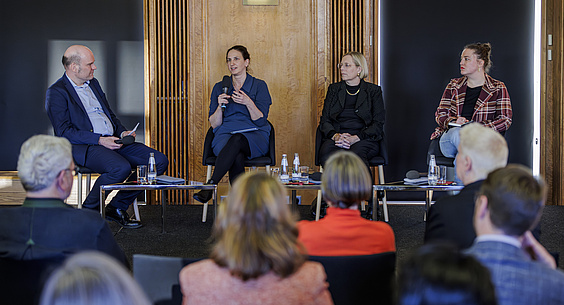
How can we protect freedom of science and make research resilient in times of crisis? Researchers from the USA, UK and Germany addressed these questions during a panel discussion organised by the Humboldt Foundation and the British Council – you’ll find their suggestions in this newsletter. 

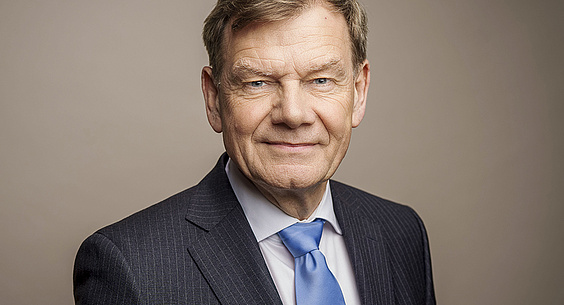
In addition, Germany’s Minister of Foreign Affairs Johann Wadephul comments on the impact of the Philipp Schwartz Initiative in strengthening scientific freedom for 10 years now. You’ll also learn all about our measures to help at-risk researchers from Ukraine. And: A new handbook shows how scientists can defend themselves against restrictions arising from autocratic developments. 

Johann Wadephul: “Knowledge is the greatest asset”

In his guest article in our Humboldt Kosmos Magazine, Foreign Minister Johann Wadephul explains how, in its first decade, the Philipp Schwartz Initiative has become an indispensable refuge for threatened researchers.
 

Four years of war in Ukraine: We will continue our efforts and commitment for Ukrainian researchers

The Humboldt Foundation continues to support Ukrainian researchers. More than 350 researchers have been able to carry on their work in Germany and Europe and, in doing so, strengthen the Ukrainian research system.
 

“Freedom of science is a seismograph for the freedom of a society"

Creativity in science requires academic freedom and institutional autonomy, but how can we protect it? The Humboldt Foundation and British Council Germany jointly hosted a panel discussion on resilient research.
 

We need that uncomfortable outside perspective!

‘Thanks to German support programmes, researchers who are persecuted in their home countries can continue their work here. This is more than just providing assistance: it exposes weaknesses in our scientific system.’ An article in the Tagesspiegel newspaper (in German).
 

How can researchers defend themselves against authoritarianism?

The Anti-Autocracy Handbook, co-authored by Humboldtian Stephan Lewandowsky, outlines measures to protect academic freedom while encouraging people to defend democracy together. (LinkedIn)
 

Online information events – How to become part of the Humboldt Network

Humboldt Discoveries is a series of events for applicants, hosts and nominators. Join us online and get all the information you need about the Foundation’s programmes. The next info events:


  Feodor Lynen Research Fellowship
  Henriette Herz Scouting Programme
  CAPES-Humboldt Research Fellowships

Recent calls for applications and nominations

Researchers wanted! We sponsor academic collaborations between foreign and German scientists by granting research fellowships and awards and by organising symposia for scientific exchange. Open for applications:


  Humboldt Research Professorship
  Henriette Herz Scouting Programme

Humboldt on Social Media

What else is happening?


  #WomenInScience Day
  Final seminar of the Climate Protection Fellows
  Humboldt Placement Scheme: science meets politics
  New Podcast: Science Tea Time
Publisher
Alexander von Humboldt Foundation
Jean-Paul-Str. 12
53173 Bonn
Germany

Editors
Alexander von Humboldt Foundation
Kristine Logemann
Stephanie Siewert
Lisa Purzitza
Stefan Wünsche


The Alexander von Humboldt Foundation cannot accept any liability for links to external sites and their content.

Imprint   ·  Privacy Policy
Unsubscribe Newsletter