
Jump to the content
- {{#headlines}}
- {{title}} {{/headlines}}

Contact
Press, Communications and Marketing
Tel.: +49 228 833-144
Fax: +49 228 833-441
presse[at]avh.de
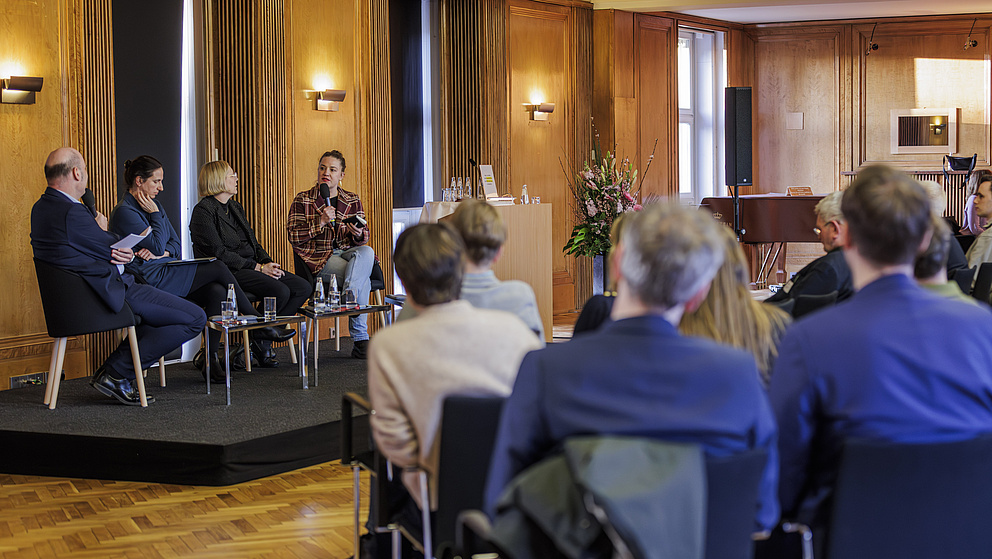
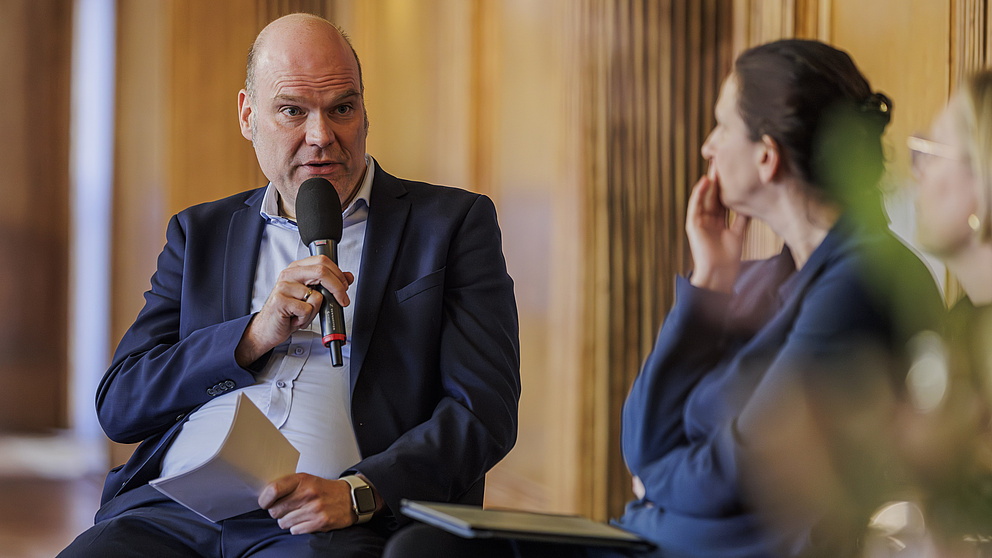
Creativity in science requires academic freedom and institutional autonomy. But how can we protect it and make science resilient? Together with science journalist and moderator Jan-Martin Wiarda, international researchers from the University of Miami, University College London and the University of Hamburg got together at the Berlin-Brandenburg Academy of Sciences and Humanities for a panel discussion to share perspectives and develop solutions.
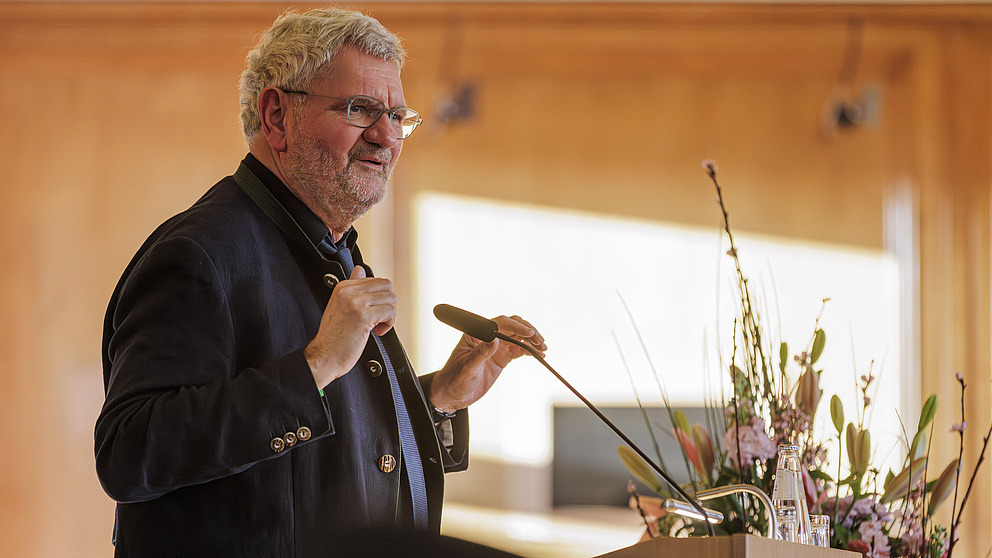
“Freedom of science is a seismograph for the freedom of a society,” said the Foundation's President Robert Schlögl in his opening speech. He emphasised the particular importance of academic freedom in times of disinformation and mistrust: “There are opinions and there are evidence-based opinions.”
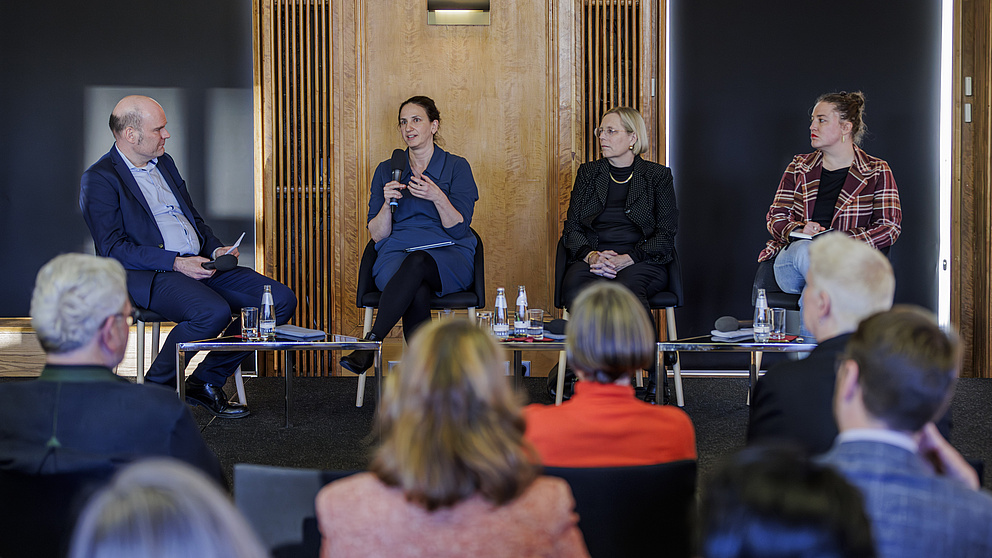
To prepare for attacks on academic freedom, the panellists Louise Davidson-Schmich (Humboldtian and Professor of Political Science, University of Miami), Christina Pagel (Professor of Operational Research, University College London) and Hanna Pfeifer (Head of Research Area “Societal Peace and Internal Security”, Institute for Peace Research and Security Policy, University of Hamburg) discussed diverse strategies in different national, cultural and institutional contexts.
Referencing the UK, Christina Pagel recommended a checklist of questions research institutions could reflect on to prepare for attacks on academic freedom: Do you have legal protection? Who appoints the leadership of public bodies? Who controls funding and funding models? Who sets the overall strategy? Who decides what is published?
Hanna Pfeiffer stressed the need for capacity building and training from within academic institutions with regard to academic freedom and acts of resilience, such as strengthening legal and communication departments.
Other crucial measures include diversifying funding sources, building public support and reinforcing trust in science. The importance of alliances within the academic community recurred throughout the evening. Louise Davidson-Schmich stated: “You need to think about solidarity even if you think you do research in a field that is not deemed controversial, because you might be next.”
In summary, the panellists concluded that this should also be the moment for united efforts: “We have to believe in the strength of academia, we have to use it”.