Jump to the content
- {{#headlines}}
- {{title}} {{/headlines}}
How will the international science system change by 2035? What developments will influence researchers’ international cooperation – and what implications do they have for science organisations like the Alexander von Humboldt Foundation? The foresight report “The Future of Science 2035” explores key factors that will shape international scientific cooperation in the years to come. In particular, it addresses academic freedom and liberal values, geopolitical conflicts and shifts in power as well as changes in international mobility and the growing importance of digital technologies and artificial intelligence.
The report reveals that the global science system is experiencing profound change. Openness and international cooperation are still fundamental to scientific progress but are increasingly subject to geopolitical, political and technological pressure. Cross-border collaborations are not coming to an end but they are becoming more selective, more regulated and increasingly shaped by geopolitical interests.
Methods
Foresight is a structured process in strategic development designed to recognise potential future developments at an early stage, consider various future paths and derive knowledge that is relevant for decisions to be taken today. Unlike classic prognoses, foresight does not attempt to predict a specific future scenario but expands the scope to embrace various plausible developments and consequently defines several possible scenarios. The latter are designed to help guarantee freedom for strategic action even in times of uncertainty and strengthen the resilience of organisations, businesses and, indeed, political decision-makers in the face of possible changes and crises. Foresight thus assumes that the stakeholders are able to play an active part in implementing desirable future scenarios.
For this purpose, the foresight report “The Future of Science 2035” combines various scientifically tried methods, taken, for example, from empirical social research. AI-supported horizon scanning in scientific databases identified relevant future topics and trends. A two-stage Delphi survey involving external experts was used to validate these developments and weight trends with regard to their possible impact. Bibliometric network analyses visualised changes in global research and collaborative structures whilst country analyses investigated regional developments and potential future science hubs. In addition, a survey of researchers hosting Humboldt Foundation sponsorship recipients at universities and research institutions in Germany explored their perspectives and future needs.
The future of science 2035 – an overview of findings
Four key scenarios of the 2035 science system were derived from the foresight process. They reveal how the general conditions for international scientific collaborations can change – and which strategic challenges as well as options ensue for organisations like the Humboldt Foundation.
The most important points:
- GEOPOLITICS DISPLACES OPENNESS: Academic isolation, instrumentalised collaborations and security aspects are some of the most potent trends. Collaborations are more selective, regulated and geopolitically framed.
- WEAKENING OF AUTONOMOUS GOVERNANCE STRUCTURES AND SELF-CENSORSHIP: Political appropriation of universities and measurable self-censorship become systemic realities, even in democratic science nations.
- DIGITAL POWER ASYMMETRIES: Whoever controls AI models and research infrastructures increasingly controls scientific standards and access.
- MOBILITY PURSUES VALUES: A feeling of belonging, institutional protection and the normative alignment of individual convictions in a climate of academic freedom at the destination become independent drivers of mobility.
- A FURTHER POWER SHIFT IN KNOWLEDGE PRODUCTION: China is increasingly becoming the hub of an Asian research network. The Euro-Atlantic structure of the global science system is encountering a strong competitor which is increasingly setting its own standards, networks and priorities.
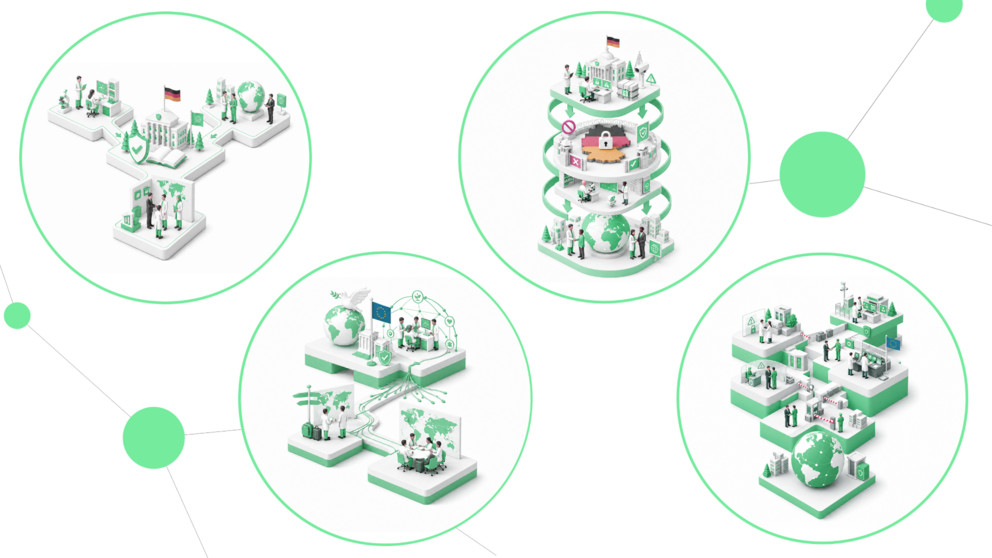
Four possible future scenarios for 2035
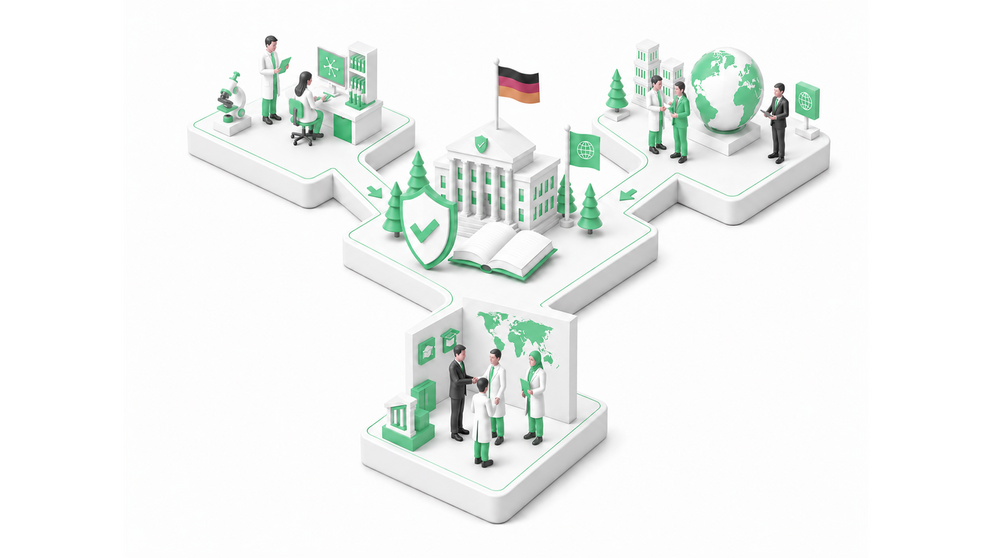
Strategic mode: positioning and expansion
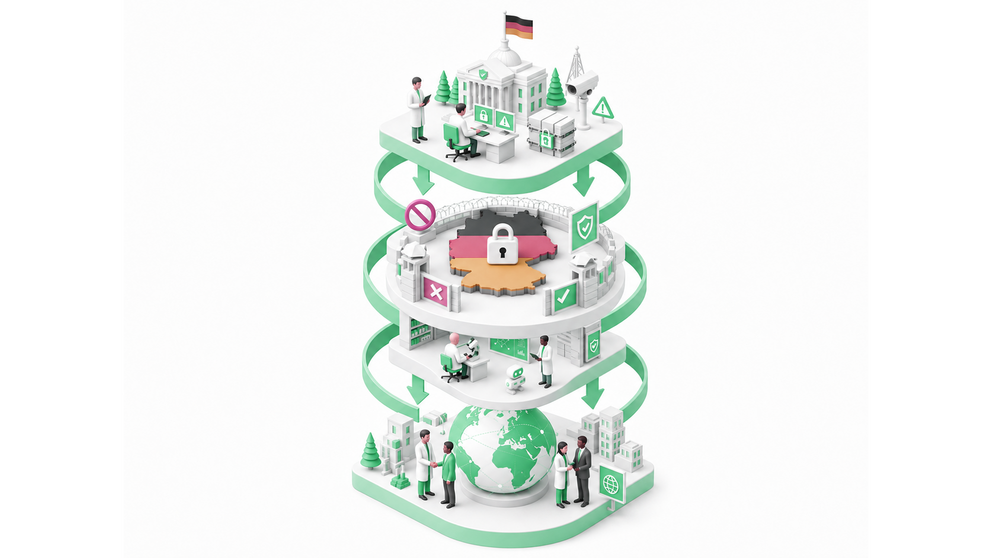
In a world in which academic freedom is coming under pressure in many places, Germany is still a location where academic freedom exists. Researchers from politically fragile systems choose Germany due to its normative dependability and digital security. Liberal values and academic freedom have become a measurable locational advantage.
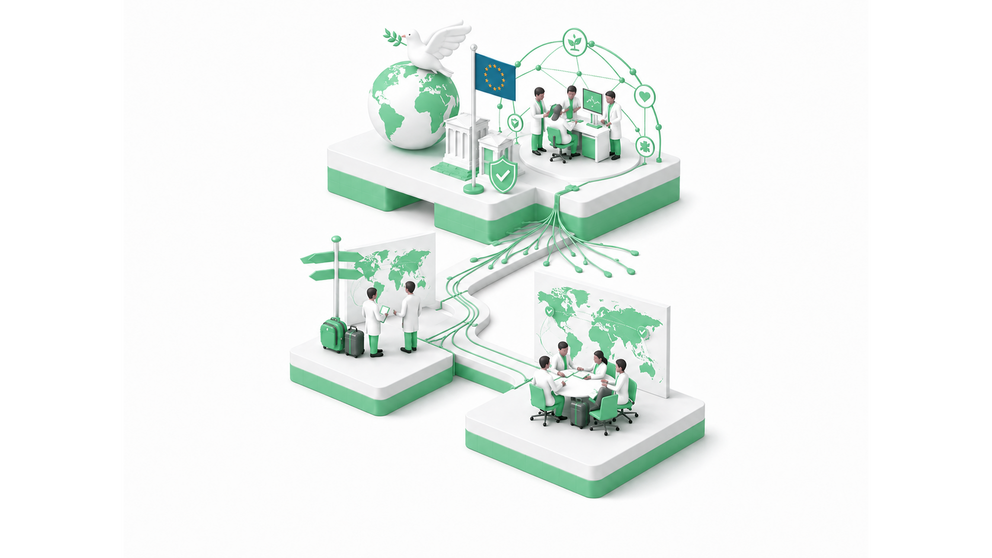
Strategic mode: participation and bridge building
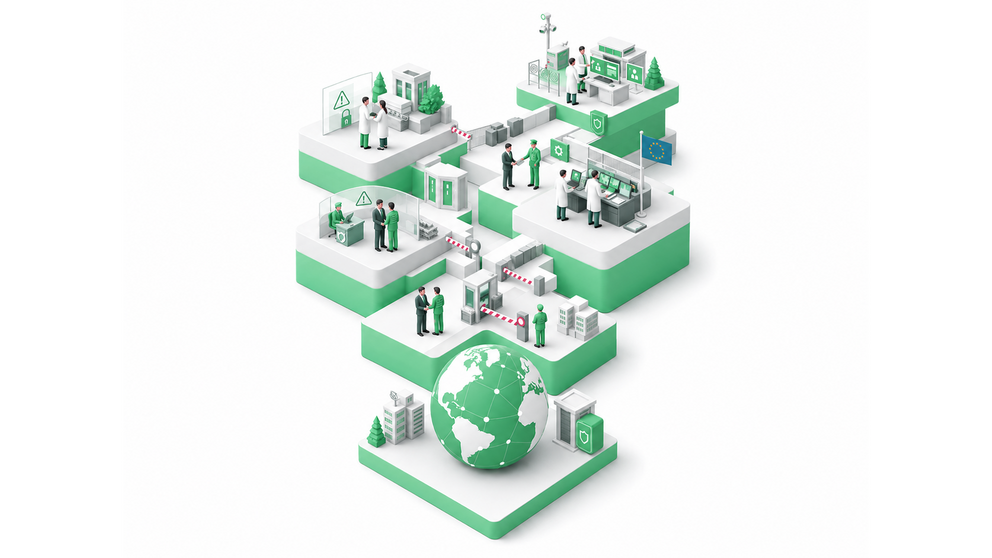
Academic freedom has been actively secured worldwide – science diplomacy is the order of the day; international networks are the infrastructure of transnational solidarity. Science diplomacy is becoming a cornerstone of practice, and maintaining an open, free research area is becoming a goal of international cooperation. Alongside the transatlantic hub, an Asian science cluster is gaining traction; the transnational area of freedom must build bridges to these expanding knowledge areas. Regions with poor structural networks, such as Sub-Saharan Africa, require special integration. The Humboldt Foundation does not pursue a distinct national path but is the co-creator of a transnational area of freedom.
Strategic mode: defence and coherence
Germany itself is under regulatory pressure: compliance consolidation, political agenda-setting and creeping self-censorship have narrowed the scope for action – without academic freedom actually being formally breached. AI systems have become the tool for the covert control of research content. Self-imposed restrictions on collaboration add to an ongoing process of relative marginalisation in the global knowledge network. The Humboldt Foundation is forced to defend its own independence from the political system that finances it.
Strategic mode: navigation and adaptation
The global science system has fractured along geopolitical lines: mobility is becoming a sorting tool; collaborations are framed by security policy. AI infrastructures are a means of exerting geopolitical pressure – those who lose access fall behind in scientific output and quality. The Asian science cluster around China is increasingly setting its own normative standards. Structurally marginalised regions – especially Sub-Saharan Africa – are in danger of being caught in the crossfire between emerging blocs. Political persecution, disruption due to war and regulatory constraints are qualitatively different types of crisis situation that require different responses.
Supported by: