Jump to the content
- {{#headlines}}
- {{title}} {{/headlines}}

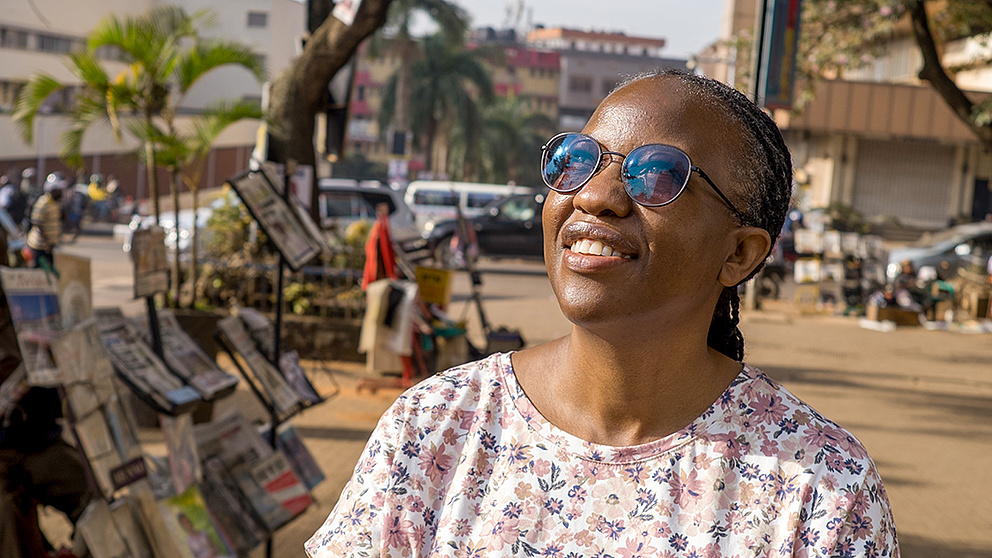
Dr Sara Namusoga-Kaale is a lecturer in the Department of Journalism and Communication at Makerere University in Kampala, Uganda. Recruited under the Henriette Herz Scouting Programme, she was a Humboldt Research Fellow at the Erich Brost Institute for International Journalism at TU Dortmund University until summer 2025. There she conducted research on topics including the freedom of the press in the African news world.
Lack of funds threatens the freedom of the press
“In the last few years, the working conditions of independent journalists in Uganda have deteriorated,” reports Sara Namusoga. Many earn ever less or have even lost their jobs. On top of this, USAID funding has ceased which means the independent media organisations have no money to invest in training or investigative journalism.
How is independent reporting affected?
“This opens the floodgates to actors like China, Russia, India or Saudi Arabia. The media are precisely one of the ways they continue gaining geostrategic importance in African countries,” Sara Namusoga explains. China, for example, was equipping entire editorial offices, offering free content from the state agency Xinhua and inviting journalists to visit China. In this way, demonstrably authoritarian states were exporting their own ideal of journalism.
Influences on freedom of the press in the focus of research
Sara Namusoga is currently investigating just how big the influence is on the media in African states, why media makers in Uganda have started opting for visual material from Beijing or Moscow rather than Berlin – and how all this affects independent journalism.
Together with partners at universities in seven African countries and TU Dortmund University, she analyses financial structures and interviews media professionals who have been affected. Amongst other things, the researchers want to explore how new geopolitical actors are portrayed in African media – and the influence this has on public opinion locally.