
Jump to the content
- {{#headlines}}
- {{title}} {{/headlines}}

Contact
Press, Communications and Marketing
Tel.: +49 228 833-144
Fax: +49 228 833-441
presse[at]avh.de
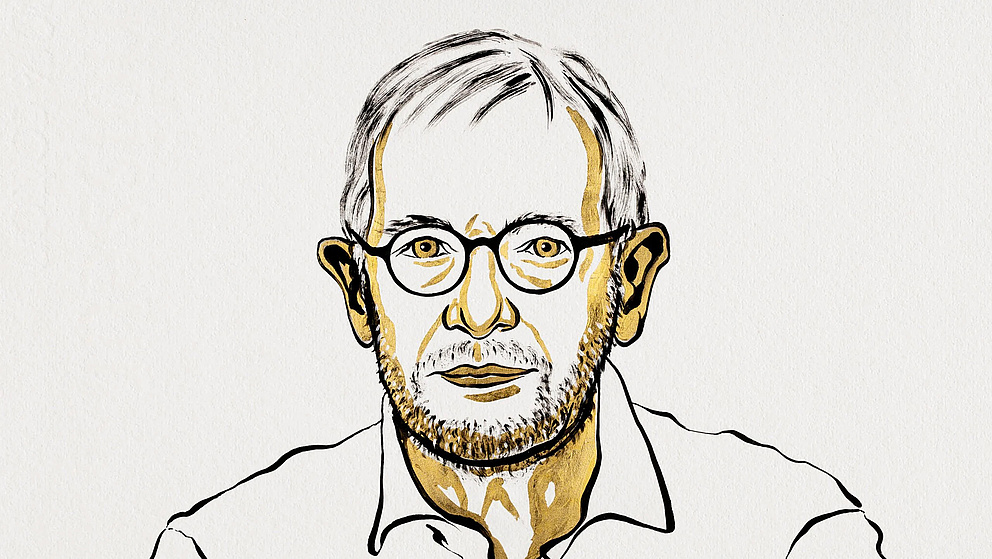
The Alexander von Humboldt Foundation extends its congratulations to the Belgian-American astrophysicist Francis Halzen upon being chosen for the Nobel Prize in Physics. He was selected to receive the award for his “decisive contributions to the IceCube Neutrino Observatory and the discovery of high-energy neutrinos of astrophysical origin”. The worldwide network of individuals who have been sponsored by the Humboldt Foundation now includes 64 Nobel Prize laureates.
In 2006, Francis Halzen received the Helmholtz-Humboldt Research Award which was jointly awarded by the Alexander von Humboldt Foundation and the Helmholtz Association. During his research stays in Germany, he worked with Christian Spiering at the German Electron Synchrotron (DESY) in Zeuthen. At DESY, Halzen focused on the area of multi-messenger astronomy. His research combined neutrino data with data from gamma and cosmic ray observations. He was selected to receive the Humboldt Foundation award in recognition of his contributions to the IceCube Neutrino telescope. Dr Halzen currently works at the University of Wisconsin–Madison in the USA.
“We congratulate Francis Halzen and are particularly pleased that the researcher receiving this recognition is a Humboldtian and a part of our international network”, said Robert Schlögl, President of the Humboldt Foundation. “His research career exemplifies what the Humboldt Foundation wants to promote: excellent research, international cooperation and cross-border exchange. The fact that international ties of this type generate scientific impetus of global importance constitutes special recognition for our Humboldt Network as well.”
Every year, the Alexander von Humboldt Foundation enables more than 2,000 researchers from all over the world to spend time conducting research in Germany. The Foundation maintains an interdisciplinary network of well over 30,000 Humboldtians in more than 140 countries around the world – including 64 Nobel Prize winners.