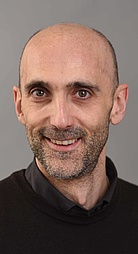
Jijie Chai
Cologne and the Max Planck Institute for Plant Breeding Research want to draw their research in medicine, biochemistry and botany closer together. Nominating University: University of Cologne together
Last change:
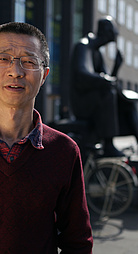

Cologne and the Max Planck Institute for Plant Breeding Research want to draw their research in medicine, biochemistry and botany closer together. Nominating University: University of Cologne together
Last change:
neighbouring disciplines such as those at the Interfaculty Institute of Microbiology and Infection Medicine. Nominating University: University of Tübingen Environmental Microbiology / Bioprocess Engineering
Last change:
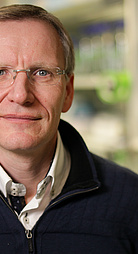

University: University of Veterinary Medicine Hannover, Foundation (TiHo) Virology / Immunology Guus F. Rimmelzwaan works at the intersection of human and veterinary medicine. He is an internationally eminent [...] 2018 Guus F. Rimmelzwaan As an Alexander von Humboldt Professor at the University of Veterinary Medicine Hannover, Foundation (TiHo), Guus F. Rimmelzwaan is invited to help put immunology and health research [...] at TiHo Hannover Brief bio Guus F. Rimmelzwaan works at the intersection of human and veterinary medicine. He is an internationally eminent immunologist specialising in virus research, especially on influenza
Last change:


Anan Alsheikh Haidar fled Syria in 2013. Her work as a professor of criminal law at the University of Damascus had put her name on the blacklist of Bashar al-Assad's government. With a fellowship of the Philipp Schwartz Initiative, she came to the University of Cologne.
Last change:
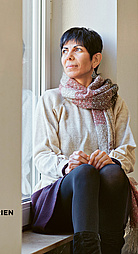

The veterinarian Mahmod Muhsen was able to continue his research at the University of Leipzig. Because of the war, he had not been able to return to Syria.
Last change:

Magazine Humboldt Kosmos
Being faster and more reliable than humans, artificial intelligence is usually used to evaluate huge volumes of data and identify patterns in them. But what happens when there isn’t enough data, and you have to work with uncertainties? In this case, thanks to millions of years of evolution, nature easily has the upper hand.
Last change:

How AI, Robotics and Digitalisation Transform Our Lives
Last change:


The human gait – which usually looks intuitive and natural – is an extremely complex form of locomotion. When you are walking, you are constantly defying gravity and have to keep fine-tuning your balance. This is precisely why the upright gait is still difficult to replicate technically. Mechanical engineer Heike Vallery studies gait and balance and develops applications in hardware and control technology for the rehabilitation of people with reduced mobility.
Last change:


Working within a framework of African-German partnership, the Humboldt Research Hubs develop strategies for addressing pandemics. Germany’s Federal Foreign Office and the Bayer Foundation are currently financing six research hubs in Africa. Each of the six research hubs will receive up to €750,000 in funding over a period of five years.
Last change:
Cancer cells grow significantly quicker in the body than normal cells. Their metabolism thus functions differently and utilises nutrients at a much faster rate. The metabolism researcher Christian Frezza is searching for ways of disturbing or even preventing nutrient utilisation in cancer cells so that they can no long grow and eventually die.
Last change: