Jump to the content
- {{#headlines}}
- {{title}} {{/headlines}}
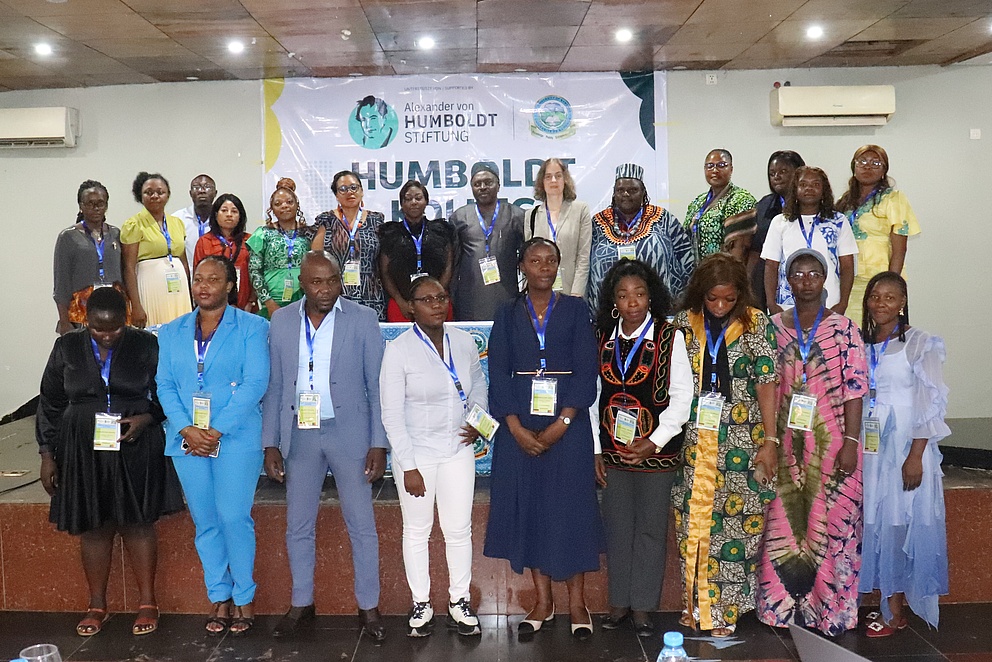
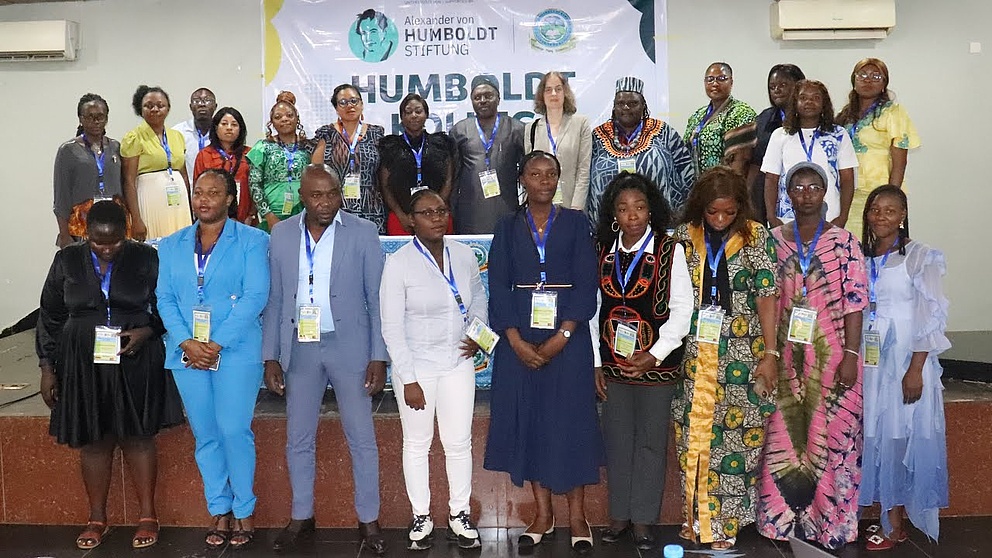
For years, Humboldt Alumni Award winner Rosemary Tonjock has been mentoring young female scientists. With the Humboldt Kolleg on Gender Networking in Bafoussam, she wants to draw attention to the gender gap in STEM fields and give women the opportunity to network. She herself was made aware of the Humboldt Foundation’s fundings in 2019 at the very first conference on this topic.
Impressive career
“My colleagues warned me that it was very unlikely that I would have a chance,” says the Humboldtian about her application to the Georg Forster programme for experienced researchers in 2020. Nevertheless, Tonjock was not discouraged and was ultimately selected. By that time, she had already built an impressive career in mycology and plant pathology and had been on research stays in South Africa and the USA.
“I spent 18 months in Germany, nine months in the first phase, came back home, taught for three months, and I went back for nine months,” reports the high-end scientist, who raised six children with the support of a strong family network, emphasising the flexibility of the programme. “Being a Humboldtian and being able to conduct research in Germany is an honour and it’s also enjoyable,” says Tonjock, whose research stay unfortunately coincided with the pandemic. She repeatedly appeals to young African female researchers not to allow themselves to be constrained by prevailing gender roles.
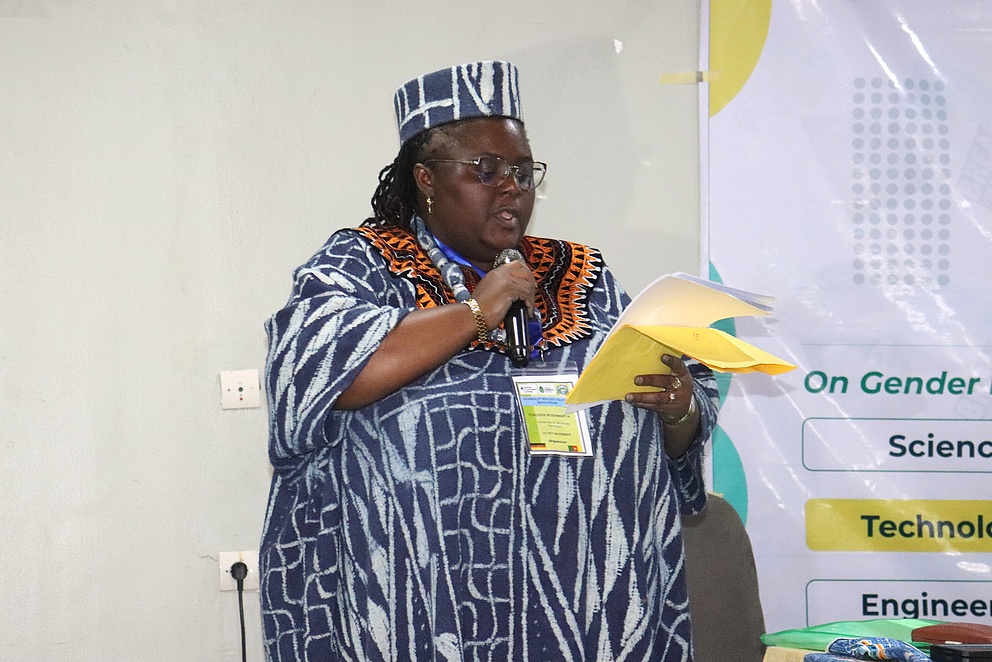
“We need more women in STEM, these fields drive the innovation and development of the country, but if it is only based on one gender, it’s simply not feasible,” says Tonjock who wants more women – not just men – to sit at the table where scientifically important decisions affecting society are taken. This woman radiates so much energy that there is no doubt she will revolutionize gender relations at Cameroonian universities, and not just in STEM fields.
Women dramatically underrepresented
According to statistics from the World Bank and the Cameroonian Ministry of Women and Family Affairs, only 15 percent of Cameroonian women have a master’s degree. Of the 113 Humboldtians in the network from Cameroon, only 18 were women at the end of 2025. To bring more women into top-level science, Tonjock launched the PROFAESTEM mentoring programme. Women can use an app to find mentors who can provide support and advice. Tonjock was awarded the Humboldt Alumni Prize for this project.
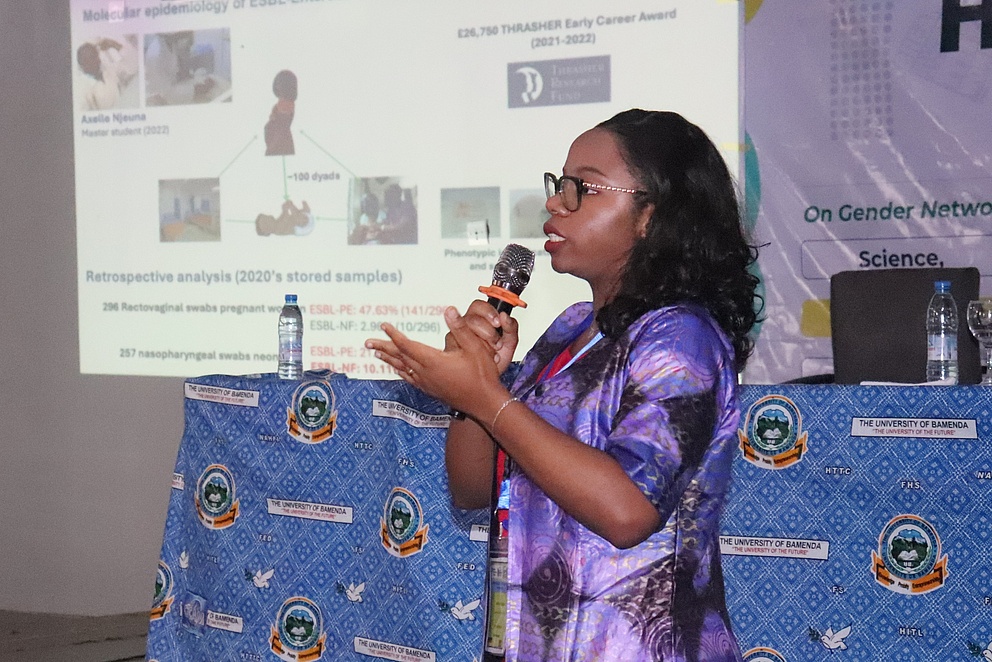
‘We rise by lifting others’ is her motto. Tonjock invited female role models to the “Gender Networking Conference on Science, Technology, Engineering, Mathematics and its Transdisciplinary Perspective for Sustainable Development” to pave the way for young female scientists. In her keynote speech at the opening of the conference, Dr. Luria Founou talked about her own career and appealed to the women present to realise their own potential and believe that any problems that arise along the way can be solved. The Cameroonian microbiologist is a member of the World Health Organization’s advisory board and the founder of the D2AFRICA platform. This platform aims to connect African researchers and build an “ecosystem” that allows Africans to reach the forefront of global knowledge production. “The conference was an opportunity for young researchers to meet female role models, network, and challenge the stereotypes in African society that make people believe women belong in the kitchen and must bear children. There is a need to bring everyone on board if we want to promote sustainable development,” emphasises Founou.
From mere representation to real inclusion
And the message clearly gets through. “This conference is truly motivating for me as a female, just seeing that role models like the organizer Prof. Rosemary Tonjock exist,” confirms PhD student Sirri Vera Nsoh, a researcher in myology from the University of Bamenda.
Rosemary Tonjock’s mission does not end with the completion of the conference. She wants to continue convincing colleagues and policy makers of the need for sustainable female networks in the STEM disciplines.
“Let us mentor young female scientists, not only to succeed, but to belong, move beyond representation to true inclusion. Through networks, we build confidence, create opportunities, and rewrite the narrative of who belongs in STEM,” she emphasised.
If the Humboldt Network in Cameroon becomes more female-dominated in the coming years, it will be thanks to the energy and drive of Georg Forster alumna Rosemary Tonjock.