
Jump to the content
- {{#headlines}}
- {{title}} {{/headlines}}

Contact
Press, Communications and Marketing
Tel.: +49 228 833-144
Fax: +49 228 833-441
presse[at]avh.de
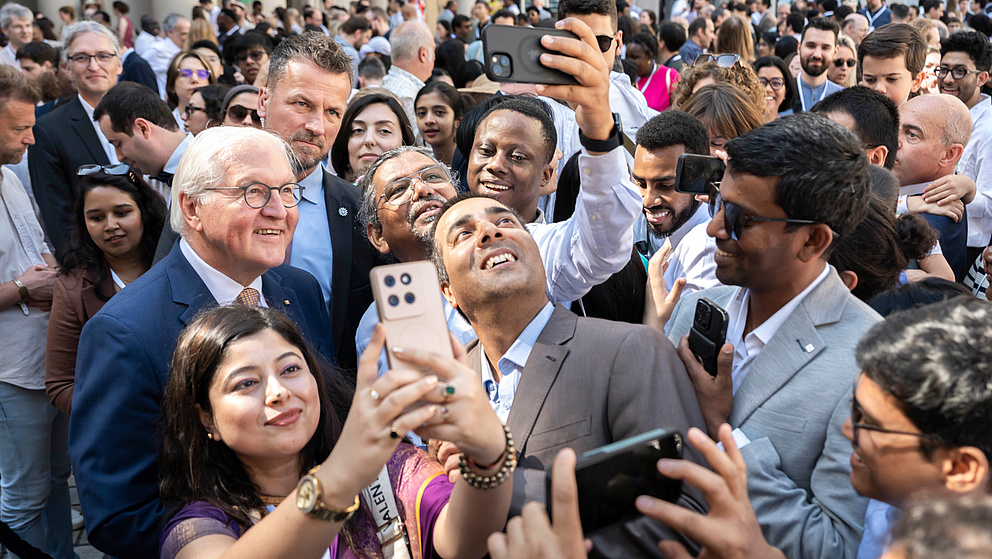
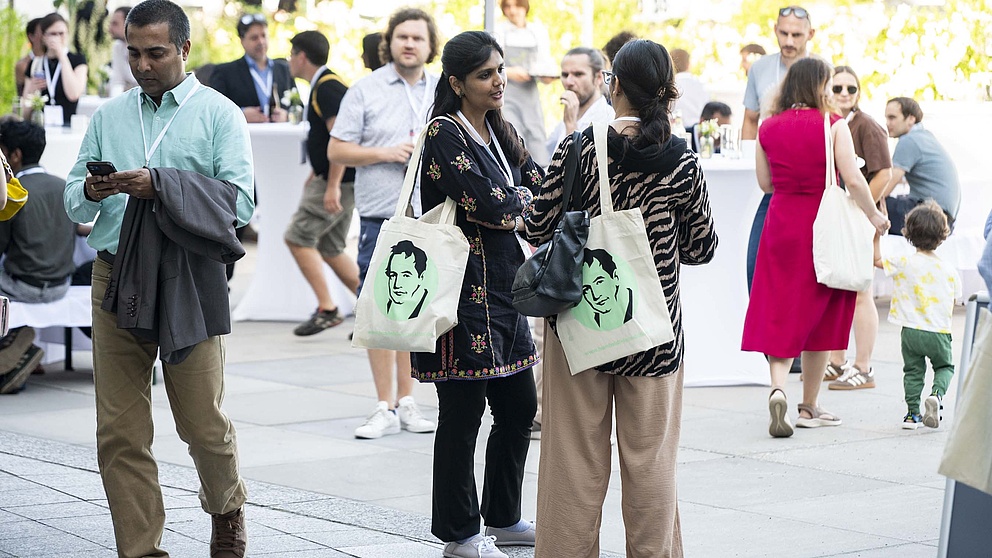
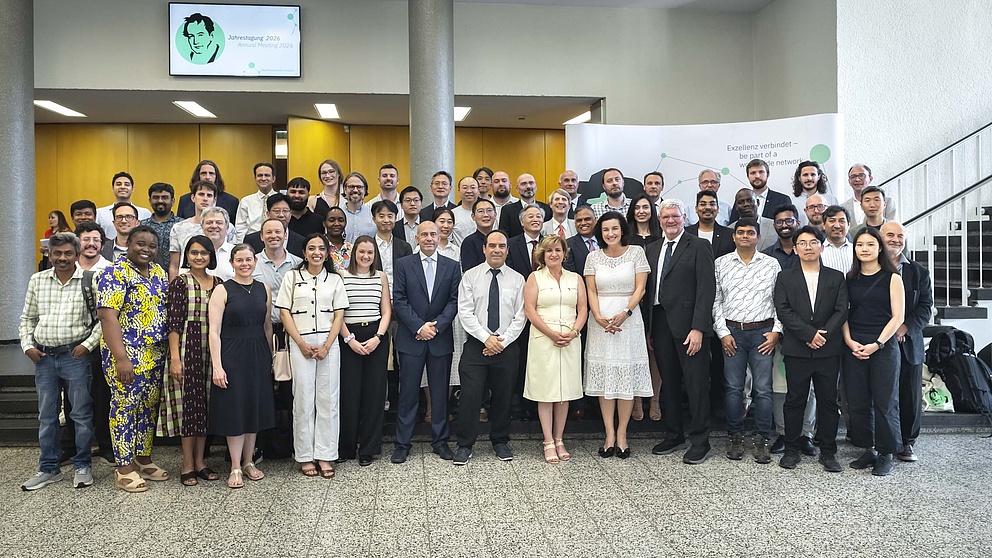
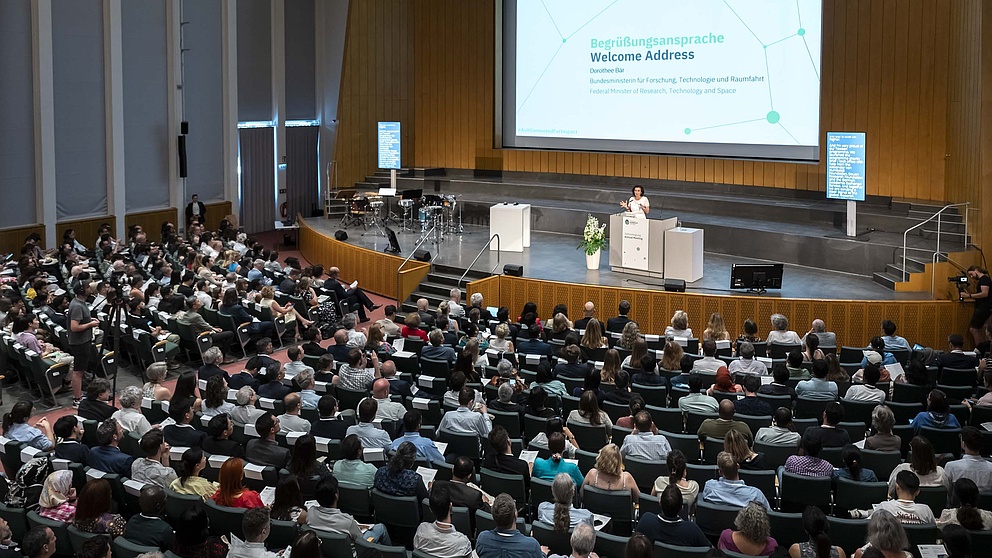
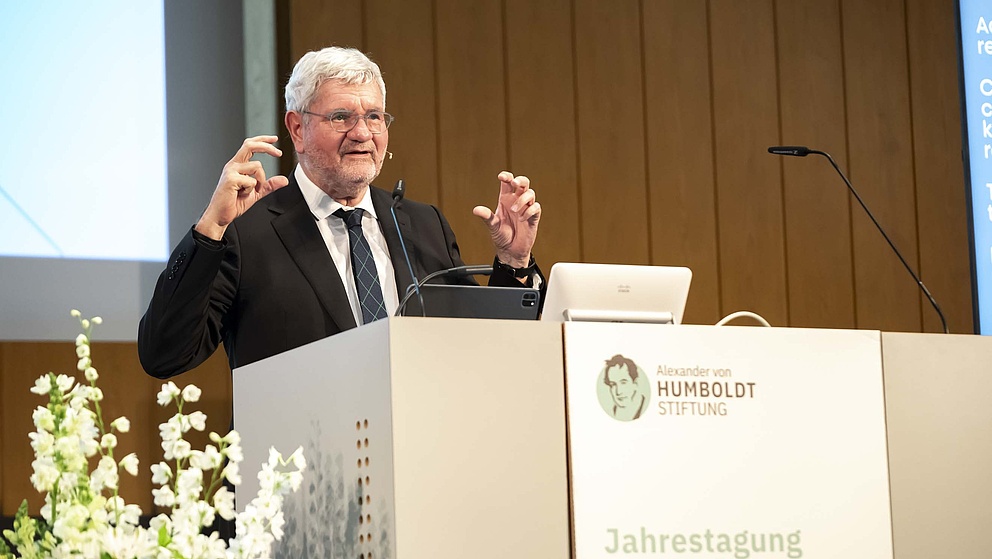
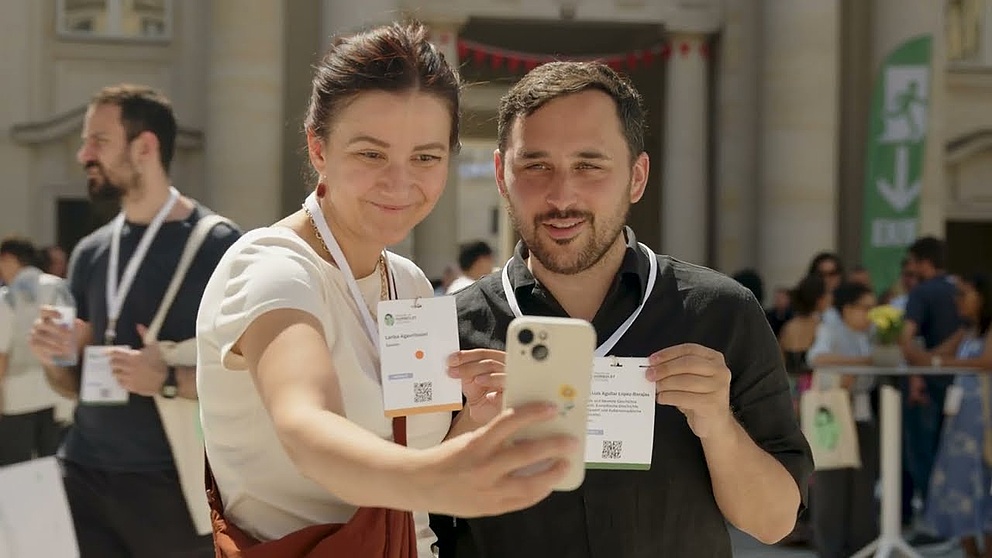
“AvH Connected For Impact” was the motto of the Alexander von Humboldt Foundation’s Annual Meeting held in Berlin on 24 and 25 June. It brought together individuals who are being sponsored by the foundation and are currently guests at German universities. The Annual Meeting offered these individuals and their families the opportunity to get together in person and meet not only other researchers who are part of the Humboldt Network but also leading German politicians. More than 670 researchers from over 70 nations gathered to discuss research, their experiences in Germany and their home countries and to gain new perspectives.
Reception given by Germany’s federal president
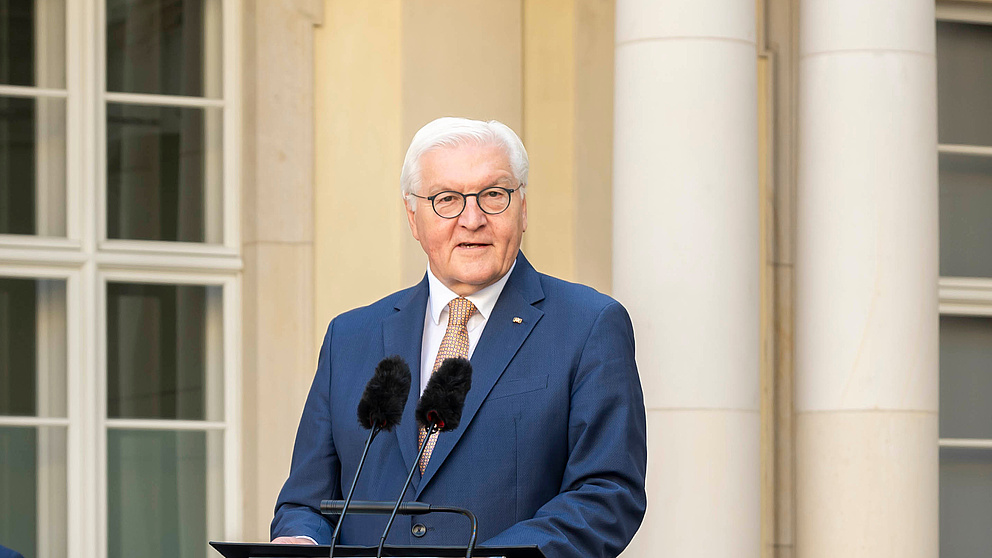
Germany’s President Frank-Walter Steinmeier received the Humboldtians in the Humboldt Forum on 25 June. President Steinmeier also presented the 2026 Philipp Franz von Siebold Award to the Japanese education researcher Masahi Urabe in recognition of his exceptional research work and his outstanding contributions to fostering exchange between Germany and Japan.
“Academic freedom is essential.”
Addressing the attending researchers, Steinmeier said, “Your work is academic freedom in practice. You strengthen the international academic community and thereby also fulfil your responsibility for promoting democracy. Informed public debate and sound analysis are crucial to the survival of democracies. Only then are citizens in a position to make well-informed democratic decisions, and that is a vital, indispensable, prerequisite for democracy. Only then can we shape the future, only then can transformation succeed. ”
In his address, President Steinmeier also focussed on the threat to research security posed by espionage, cyber attacks and the abuse of research data. The dilemma, in his words, is: “Academia has to remain open at all costs – and yet that is precisely what makes it vulnerable.” Steinmeier called for additional efforts to preserve cross-border cooperation and bridges that have been built through science diplomacy: “Let us preserve these bridges – even if unfortunately we have to be more vigilant in monitoring who is allowed to set foot on them.”
Opening of the Annual Meeting
In his opening remarks at the Annual Meeting on 24 June, Robert Schlögl, President of the Humboldt Foundation, stressed how important freedom is for science and called for supporting freedom. “Even though freedom of science is anchored in the constitution in Germany, it must be supported by society and the political sector. We are seeing political forces calling the freedom and autonomy of science and research into question and are increasingly open in their efforts to restrict it”, said Robert Schlögl.
Noting this year’s motto, he said, “Connected For Impact puts into a nutshell what the Humboldt Foundation stands for and how it operates. We work together in the Humboldt Network across borders and across disciplines. We have the common goal of generating new findings, producing scientific impact – and concomitantly social impact – when solving major issues of global importance.”
Without freedom, there would be no impact, Schlögl noted. Germany offered the prerequisites – the right to freely choose one’s research questions, topics, methods, means and collaborative partners – for this. The strong demand for funding programmes offered by the Humboldt Foundation and other organisations showed just how great the need for this is. Thanks to the Global Minds Initiative Germany and the Philipp Schwartz Initiative, the Humboldt Foundation could serve this demand better and Germany could benefit from the innovative strength and scientific progress arising from it, Schlögl added.
With respect to the announcement made by the Federal Ministry for Economic Cooperation and Development that government support for universities provided through development cooperation is to be discontinued entirely and will no longer be funded in the future, Schlögl said: “We consider the planned cuts in this area to be very short-sighted because they mean irreparable damage to our standing, which has been based to date on dependability and respect for our partners.”
In her welcome address, Federal Research Minister Dorothee Bär noted that “the motto for this meeting – Connected For Impact – is not only a wonderful description of the Humboldt Family, it also is a very apt description of our High-Tech Agenda for Germany. We are using this programme to invest in six key technologies on a targeted basis in order to be able to help shape the world of tomorrow – in a joint effort by the research sector, industry and Germany’s federal states. With our Global Minds Initiative Germany we not only offer a safe harbour with freedom of science, we also invite interested parties to take part in the High-Tech Agenda.”
In her welcome address, Minister of State Serap Güler from Germany’s Federal Foreign Office stressed the importance of science diplomacy in a time of radical change: “Science and research are operating today in an environment of geopolitical tensions, strategic rivalries and new security issues. For this reason, particularly in a time of profound change, international research cooperation is much more than an investment in knowledge. It creates trust, strengthens resilience and constitutes the foundation for long-term partnerships.” She encouraged the attending Humboldtians: “You generate new knowledge, open up new prospects, and keep channels of communication open. Please continue to be ambassadors of scientific exchange and international dialogue.”
Every year, the Alexander von Humboldt Foundation enables more than 2,000 researchers from all over the world to spend time conducting research in Germany. The Foundation maintains an interdisciplinary network of well over 30,000 Humboldtians in more than 140 countries around the world – including 64 Nobel Prize winners.