
Oliver Brock
robots which can produce complicated reactions and motion sequences and are thus suitable for use in medicine, space travel or in case of accidents involving radioactivity. At Berlin’s University of Technology
Last change:


robots which can produce complicated reactions and motion sequences and are thus suitable for use in medicine, space travel or in case of accidents involving radioactivity. At Berlin’s University of Technology
Last change:
developing applications based on these insights. At the intersection of biophysics, mathematics and medicine, Oskar Hallatschek produces pathbreaking insights into evolutionary dynamics using both mathematical
Last change:


Peter N. Robinson is a pioneer in the computer-assisted genome and phenotype analysis of genetic diseases. His major work has been the development of the Human Phenotype Ontology, which is now a standard tool used internationally to diagnose gene-related diseases. At the Charité in Berlin, Robinson is invited to develop algorithms for AI-based precision medicine.
Last change:


Philosophy and the History of Science as well as in the History of Ancient Medicine. He focuses on the dialogue between philosophy and medicine. Nominating University: Humboldt-Universität zu Berlin Classics Philip [...] Philip van der Eijk focuses on the dialogue between philosophy and medicine. His current research interests are concerned with the understanding of the interaction between body and soul from Antiquity to [...] expected to give significant impetus to and expedite the internationalisation of the History of Ancient Medicine and Classics in Germany. Berlin’s Humboldt University has established a Centre for the History of
Last change:
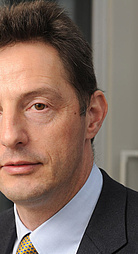

Magazine Humboldt Kosmos
Enthusiasm for all the things artificial intelligence can do is enormous – but people are also worried about the risks inherent in a technology that could outstrip us. AI experts in the Humboldt Network analyse what AI can already do today, what it still has to learn and what risks it involves.
Last change:


News
Working in the Felsenkeller underground lab at the Helmholtz-Zentrum Dresden-Rossendorf, Humboldt Fellow Eliana Masha is investigating what is going on inside the sun. The nuclear astrophysicist from Albania wants to determine the origins of the universe and show that anyone can become a researcher.
Last change:
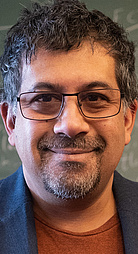
The mathematician, statistician and computer scientist Sayan Mukherjee has produced crucial work in the still young field of topological data analysis through which imaging methods can be improved and predictions made about diseases. In Leipzig, Mukherjee’s expertise in the evaluation of biological data is set to open up new avenues in precision medicine.
Last change:

Press Release
The Alliance of Science Organisations is drawing attention to the threatening consequences which a possi-ble energy crisis could have for science and academia in Germany.
Last change:
News
The Munich immunologist Julia Jellusova, a new scout in the Henriette Herz Scouting Programme, is a first-time Humboldt host. She will utilise her own networks to recruit three postdocs for her team and the Humboldt Network.
Last change: