
Jump to the content
- {{#headlines}}
- {{title}} {{/headlines}}

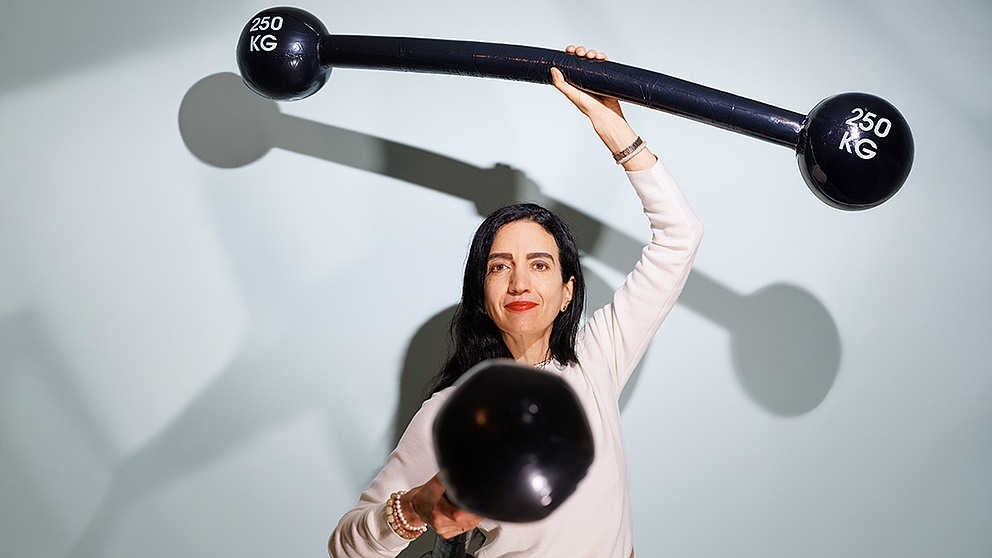
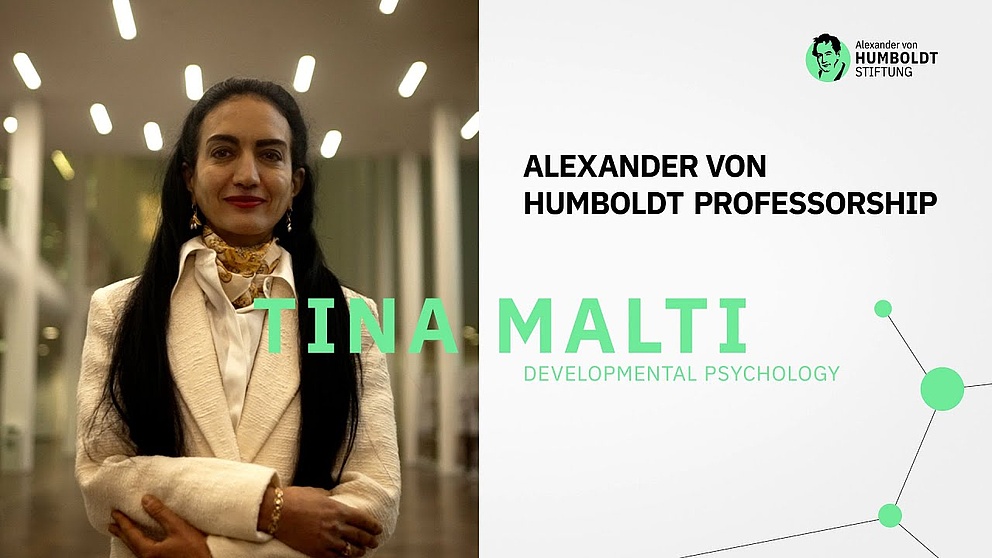
Professor Dr Tina Malti came to Leipzig University from Canada as an Alexander von Humboldt Professor in 2023. She heads the Humboldt Science Centre for Child Development (HumanKind) there. Her research focuses primarily on ways of empowering children.
Empowering children as a scientific mission
For Tina Malti developmental psychology is not just a science, but pure enthusiasm. “Nothing is as fascinating, magical and complex as childhood development,” says Malti. The diversity of characters alone she finds impressive. “Some children are funnier than any clown, others are particularly sensitive. And yet others captivate us with their capacity for enthusiasm.” Drawing on the biodiversity of the plant and animal world, Tina Malti calls this variety “psychodiversity.”
For 25 years, the Alexander von Humboldt Professor has been studying the social-emotional development and mental health of children and young people – always with the question in mind: How can we empower children and support them emotionally? One of the things she investigates at HumanKind at the University of Leipzig is how their various talents and potential can best be encouraged – and what it is that makes children resilient, that is, so strong that they even manage to deal with serious crises.
Self-compassion is the key to healing, resilience and growth
But how can we strengthen resilience in children? In her role as a psychologist and psychotherapist, Malti worked, for example, with children who had escaped from war zones or had other traumatic experiences. “It’s really important for children like these to develop self-compassion,” she says. “If they suppress their grief and pain, they are in danger of having fears and strong negative feelings catch up with them at a later stage.”
Empowering children: What strategies are effective?
Tina Malti has also developed training methods to strengthen mental well-being: relaxation exercises and meditation, for instance, help to downregulate fears and aggression. She uses roleplay to practice mindfulness, empathy and compassion. “We cooperate with nurseries and schools, for example, and develop concepts for avoiding depression and preventing violence.”