
Jump to the content
- {{#headlines}}
- {{title}} {{/headlines}}

Meg Crofoot is the Director of the Department for the Ecology of Animal Societies at the Max Planck Institute of Animal Behaviour and an Alexander von Humboldt Professor at the University of Konstanz. In 2022, the behavioural ecologist and evolutionary anthropologist was awarded an ERC Consolidator Grant.
Animal behaviour – insights into monkey decision-making
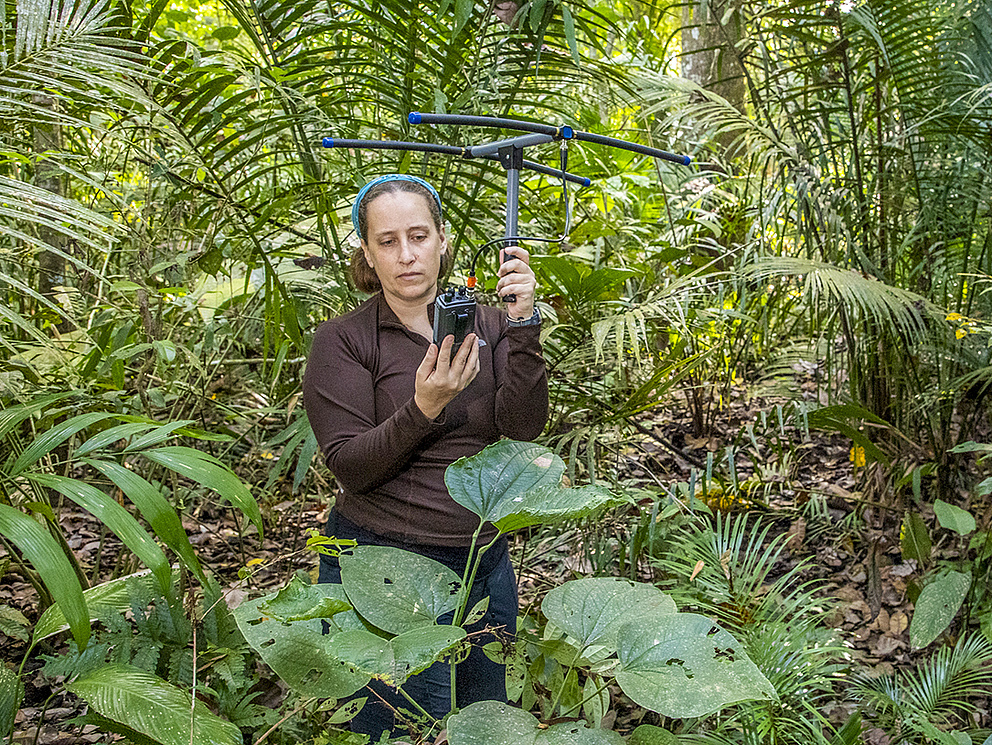
It is often still dark when Meg Crofoot sets off in the morning. “In Panama my day usually starts at four o’clock in the morning,” the US-American behavioural researcher explains. In her rucksack she packs her equipment, water and some snacks. Then off she goes: on foot through dense jungle on the search for the groups of monkeys she is currently studying. In Panama these are either capuchins or spider monkeys, which means excellent climbers who move around almost exclusively in the treetops.
“When we find them, my team and I effectively spend the whole day chasing after them,” says Crofoot, laughing. The terrain is hilly, the air tropical, humid and warm. “It’s physically exhausting, you sweat and get loads of ticks but it’s a lot of fun.”
Both species of monkey are very social with a lot of interaction within the group. “It’s almost like a soap opera that you can watch live,” she says. “Power struggles, jealousy, tantrums, tricks: you get it all.”
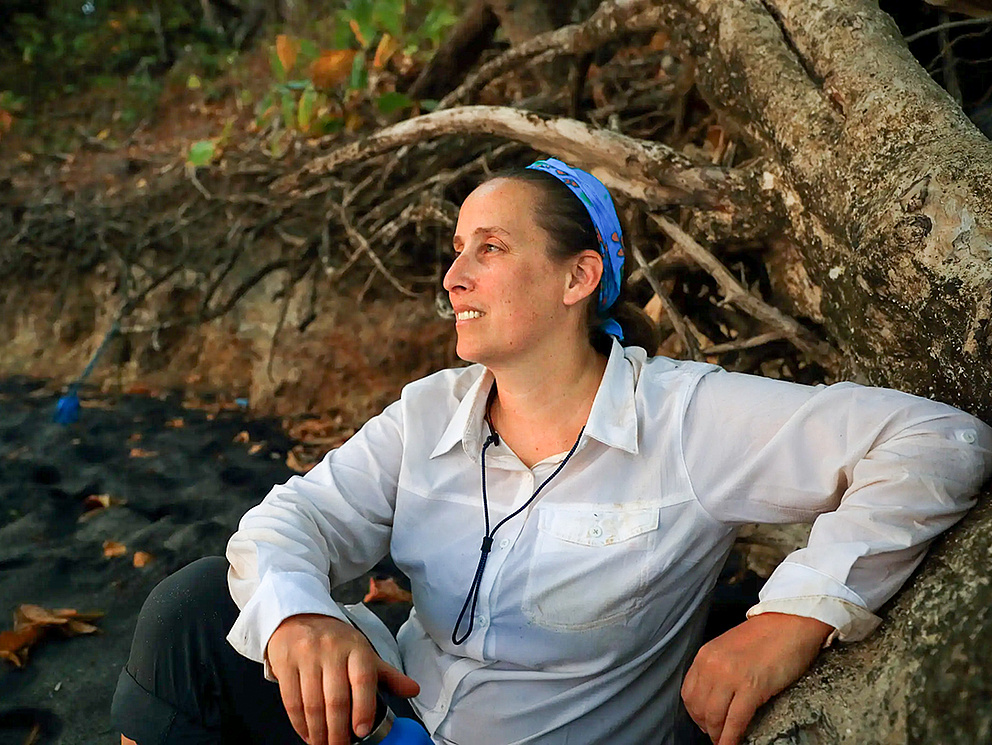
But what really interests Crofoot in terms of animal behaviour are the decisions the monkeys make as a group – and how they come about. “At Konstanz we investigate animal societies, that is, groups of mammals for whose members belonging to a group plays a vital role,” Crofoot explains. So, not swarms of fish or birds which have often been the focus of collective behavioural biology in the past.
The power of the group: Focus on individual roles
The Konstanz researchers collect their data during field trips and immediately transfer them to the Movebank database which can also be accessed by the members of the team back at the institute. There, the animals’ movement patterns and behaviour are effectively analysed in real time and the results fed back to the researchers in the field. This means that, where necessary, data collection and methodology can also be adapted on an ad hoc basis.
“It used to be thought that groups of animals were homogenous with all the members having equal relationships,” says Crofoot about the progress of knowledge in behavioral biology.. But this is now considered outdated. “In the animal societies we study, each of the individuals has different needs and abilities as well as differing degrees of influence and power, which produces asymmetries.”
“It’s all about understanding how humans have become such unusual apes.”
Who are we as a species?
Meg Crofoot wants to discover with her research on animal behaviour how social relationships need to be constructed so that animals can work together successfully in a group. How decisions are made, she says, is key.
“Of course, the object of all this is also to understand how humans have become such unusual apes,” says Crofoot, laughing once again. “Because that’s precisely what we are, extremely unusual apes.” Hovering behind this is a philosophical question: who are we as a species? “In our research we try to address this issue using modern technology,” says the 45-year-old. “I’ve always been very interested in what individuals can do when they get together in groups.”
Childhood dream realized with a degree in behavioural biology
Crofoot’s job is a childhood dream come true. She grew up in the US state of Maine, on the border with Canada. “My parents didn’t want me to watch commercial television, so I probably saw far too many animal documentaries,” she says. As a teenager the idea of becoming an animal researcher took a back seat.
“When I started uni, I wanted to work for USAID,” she notes; that is, in development aid: do good, travel, learn languages. She enrolled at Stanford to study human biology. “But given the current state of the world I am pretty glad I didn’t go for development aid otherwise I’d probably be out of a job by now,” she adds. USAID was wound up by the US government under President Trump in 2025.
It was only while she was at university that Crofoot realised that her childhood dream of becoming an animal scientist could be made into a genuine career. After completing a BA in behavioural biology at Stanford, she moved to Harvard in 2001 to do a Master’s in anthropology. For her doctorate she studied the competitive behaviour of white-faced capuchins in Panama.
The majority decides – new insights thanks to new technologies
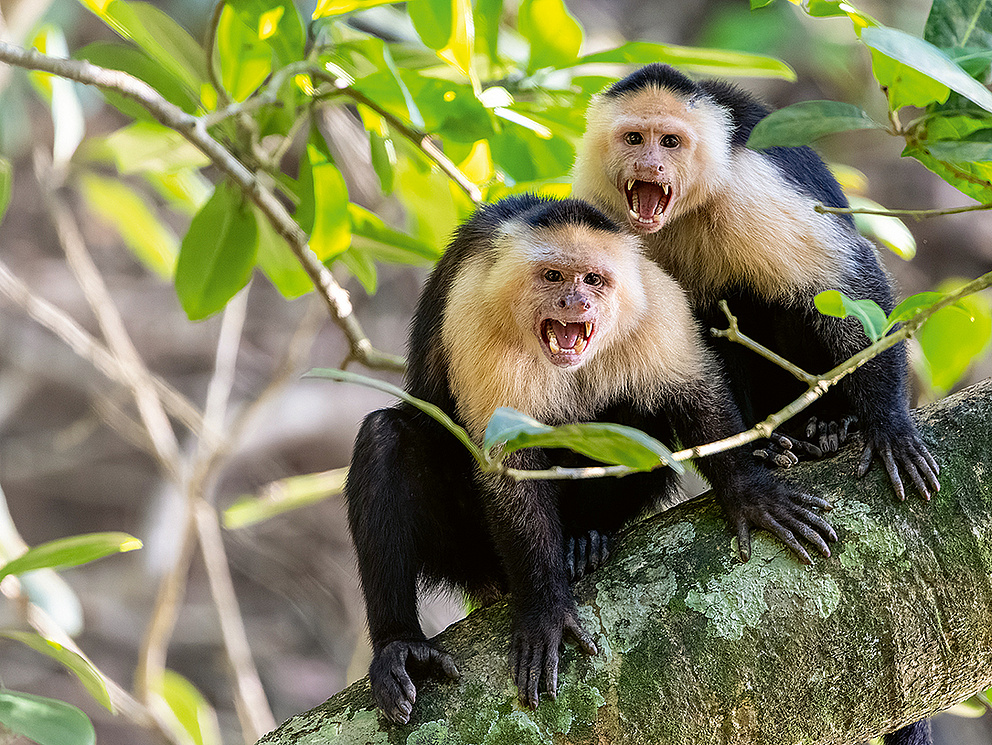
“In the field the rival groups of capuchins were constantly involved in aggressive altercations but still lived peacefully next to small groups, as though there were a tacit balance of power,” Crofoot explains. “I wanted to understand how that could be when one group was clearly in the majority. Why didn’t they attack?”
As it was difficult to record herd behaviour with the naked eye, she started collecting movement data using remote sensing technology, that is, the precursor of GPS trackers. “That gave us completely new insights,” says Crofoot, such as the fact that the smaller group had a strong home advantage. Even when they were in the minority, the animals did their utmost to defend their territory against the larger group. “Nobody runs away or cheats.” By contrast, the number of deserters from the larger group moving outside of their own territory was much higher. This ultimately leads to a balance of power.
Her doctorate was the first project in which she combined participatory observation with data technology – a pioneering achievement in her subject, with important new insights into the animal behaviour of capuchins. “For us, these new technologies were as important as the microscope is for microbiology,” says Crofoot. “They reveal dynamics you can’t see with the naked eye.”
From Panama to Kenya: on the trail of democratic processes in animal behaviour
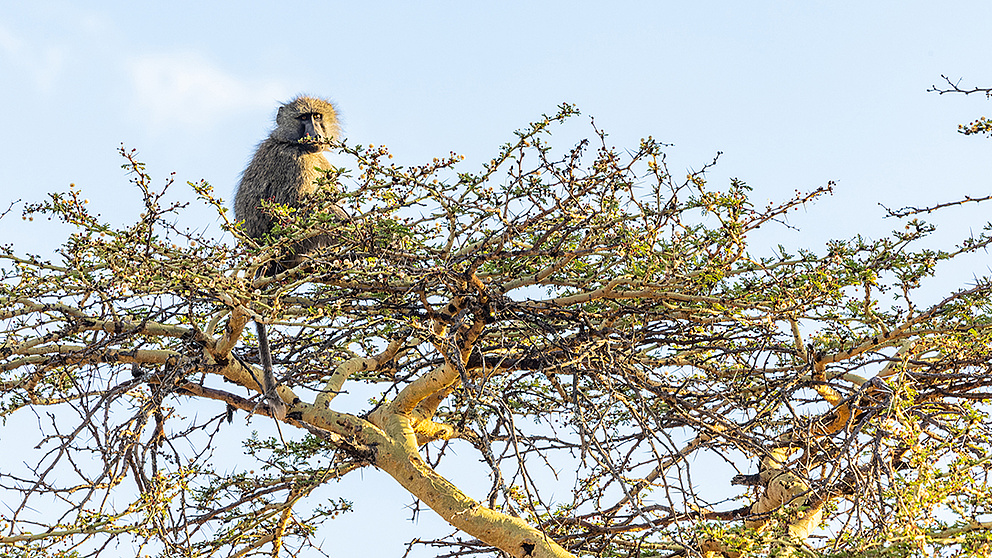
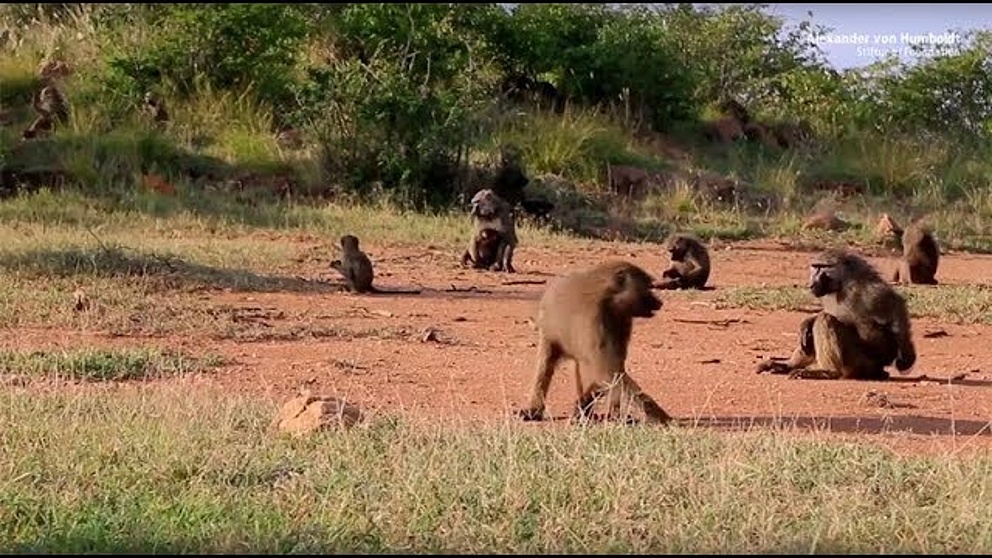
As capuchins are difficult to catch, Crofoot also investigated baboons – changing location from Panama to Kenya. “Baboons are highly motivated by food, so they often simply walk into cage traps,” she says. “It’s much easier to capture the animals securely to fit trackers to them without harming them.”
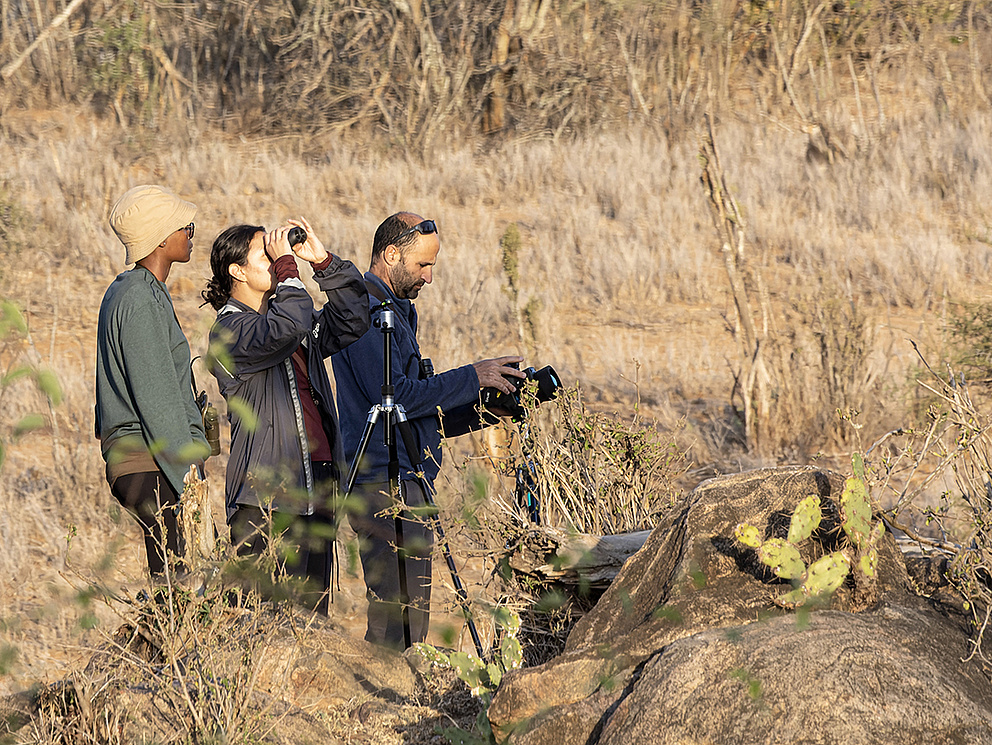
In Kenya, Crofoot and her team use a jeep to follow the baboons they have fitted with collars. They record data on speed and direction of movement as well as vocalisations and combine them with weather and environmental data. Every evening, the researchers on animal behaviour approach the baboons to wirelessly download the data stored in the collars and transfer it to the database.
This produces a comprehensive picture which has already led to a surprising finding: although groups of baboons are hierarchically organised, the majority decides on the direction. “Not even the highest-ranking male baboon dictates which route the group should take,” says Crofoot. “It is a democratic decision-making process.” Perhaps, she suspects, because the alpha male is not necessarily the most experienced.
How baboons provide insights into human conflicts
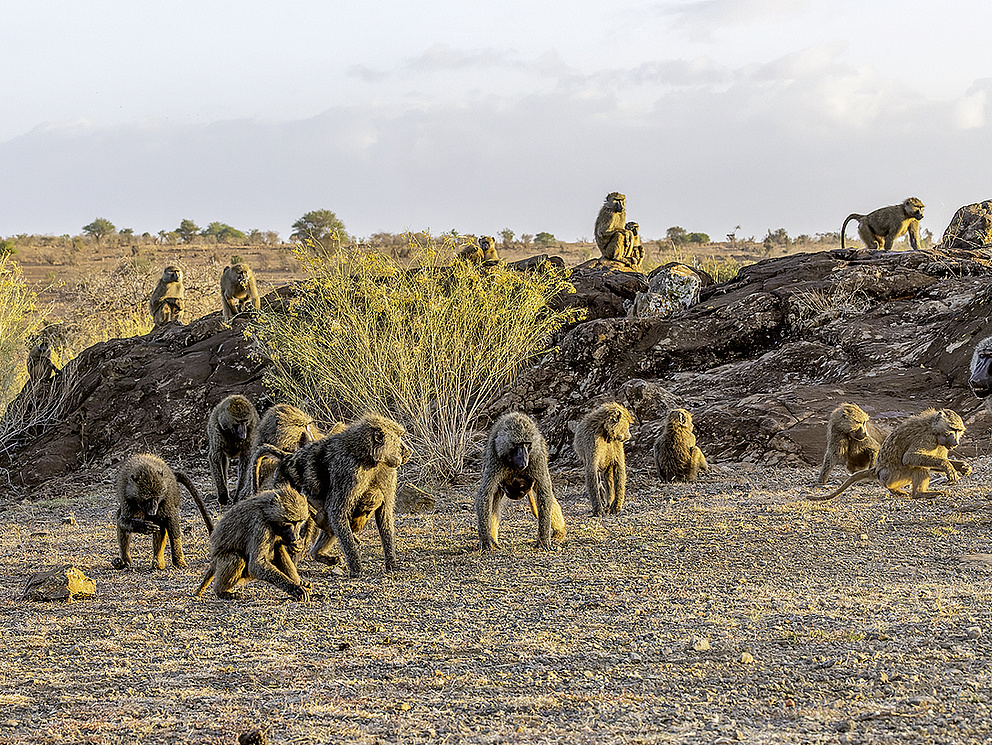
In her current project, Crofoot is investigating the collective sleep behaviour of baboons: How is the right tree for the night chosen? When to sleep? When to get up? Who sleeps next to whom? What happens if a leopard climbs the tree during the night?
“Conflicts arise amongst baboons when it comes to reconciling individual interests with the interests of the group – just like with humans,” says Crofoot. “So, we are looking at issues that also touch on the core of our everyday conflicts and tensions.”
Universal rules of animal behaviour: cooperation counts
In Crofoot’s institute in Konstanz her colleagues study the group behaviour of other species, too, such as the hunting behaviour of social carnivores like lions and hyenas that live in groups, packs or families and often hunt collaboratively. Or decision-making by bats. “The aim at some stage is to understand the universally applicable rules that determine animals’ social behaviour,” says Crofoot. To do so, comparative data on many species are required – a project that can only succeed on the basis of cooperation.
Promoting junior researchers, especially from the Global South, by including them in these efforts, is something Crofoot takes for granted. To this end, she is active as a scout in the Humboldt Foundation’s Henriette Herz Scouting Programme and recruits new junior researchers for the Foundation’s network. “Talent is equally distributed throughout the entire world,” says Crofoot, “but opportunities and resources are not.” Currently, there are postdocs from Brazil, Madagascar and Uganda working at her institute on animal behaviour. “The sponsorship-recipients’ projects, research questions and perspectives upgrade our research group in Konstanz enormously.”
“The students cooperate during reciprocal visits and benefit in practical ways from the knowledge and experience of the others.”
Moreover, in 2025, she utilised funding from her Humboldt Professorship to initiate an exchange programme for Master’s students from Germany and Kenya. “The students visit each other and cooperate both in the lecture theatre and in the field,” says Crofoot. “They can benefit in practical ways from the knowledge and experience of the others.”
Academic freedom: Dismay at us science policy
The fact that, in the meantime, her own country, the United States, does not always offer good conditions for science is something Crofoot has been observing with growing dismay. “It is absolutely terrible – for young researchers as well as established colleagues in the US who have to see their life’s work being put at risk,” says Crofoot, referring to the cuts in funding introduced by the Trump administration, the diversity programmes that have been discontinued and the threats to critical researchers.
At the same time, she also fears the global consequences of the United States’ science policy: “After all, science is the way we explain the world and try to make it better,” she emphasises.
Which means, she notes, that research outside the US is even more important. “In times like these, the fact that Germany has enshrined the freedom of science and research in its constitution sends a particularly important signal,” says Crofoot. Politically independent sponsorship programmes, like those offered by the Humboldt Foundation, were essential. “The Humboldt Professorship gives me the opportunity to conduct research for the sake of research,” says the behavioural ecologist. “Developments in the US show that this is not self-evident and therefore cannot be valued highly enough.”