
Jump to the content
- {{#headlines}}
- {{title}} {{/headlines}}
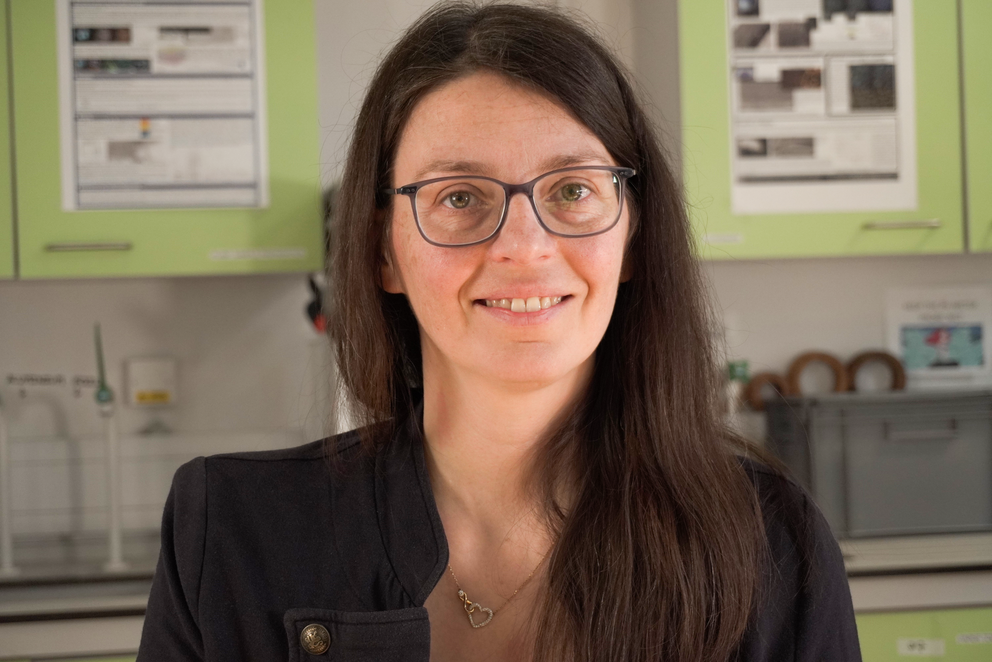
From Italy via England to Germany: Silvia Vignolini’s scientific career has been shaped by numerous research environments. Her interdisciplinary expertise ultimately led her to the Max Planck Institute of Colloids and Interfaces in Potsdam. She has been a director there since January 2023 and heads the ‘Sustainable and Bio-inspired Materials’ department. At the same time, she supervises four Humboldt Research Fellows from China, who have been part of her international research group since the beginning of 2026.
Vignolini’s research focuses on questions at the interface of chemistry, soft matter physics, optics and biology. She investigates how natural materials are assembled into complex architectures within living organisms and how these structures influence the organisms’ properties and responses. In the long term, Vignolini’s aim is to develop new, eco-friendly functional materials based exclusively on natural resources and environmental conditions.
From stars to flowers
The foundations of Vignolini’s scientific career were laid at the University of Florence, where she studied physics from 2000 to 2005. She was inspired by a book she read at secondary school: Stephen Hawking’s A Brief History of Time. “I tend to fixate on something, but I also change my mind. After reading that book, I thought: ‘This is what I have to do: I have to study astrophysics’,” she recalls.
However, the reality of her degree course did not quite live up to her expectations. She soon realised that astrophysics largely consisted of sitting in dark rooms and analysing data instead of observing stars.
Even though her scientific interests developed in other directions in the years that followed, Vignolini does not regret her choice of degree. On the contrary: “I’m glad I studied physics. I think it’s very important to delve deeply into one subject, because that teaches you to acquire knowledge thoroughly.” This sound education still forms the basis of her interdisciplinary research today.
“I think it’s very important to delve deeply into one subject, because that teaches you to acquire knowledge thoroughly.”
After Vignolini successfully completed her PhD in physics in 2009, she had a range of career options open to her. However, none of them really inspired her or gave her the feeling that she was working on something meaningful. This changed when she went to the University of Cambridge where she met the polymer physicist Ullrich Steiner. She describes him as a “fantastic person and scientist” and felt very much at home in his research group. That time was very formative for her and shaped not only her future research direction but also how she thinks research should be done.
Steiner offered her the chance to join a project in which he and his research group were investigating the structures of flowers. Vignolini accepted, though she was not entirely convinced by the project. Instead, she hoped to work on one of his other projects as well, which focused on the production of nanostructures through the self-organisation of polymers. Compared to the complex lithography and cleanroom processes she had used during her PhD, this approach struck her as revolutionary: complex nanoarchitectures could emerge almost of their own accord simply by mixing materials.
Although Vignolini was initially sceptical about the research project on flowers, it would prove pivotal for her future scientific career. Through this work, she engaged intensively for the first time with the concepts of biomimetics and the optical properties of biological systems. Over time, she developed a growing fascination for the diversity of natural sciences and she could even imagine becoming a botanist.
Although her career aspirations changed again later on, she still looks back on those three years as a postdoc with great enthusiasm. “When you move to a place like Cambridge, you naturally have access to resources that were never really available to you before. You have access to exceptional people with a whole different level of commitment. You’re surrounded by so many talented people in such a small space that it’s almost impossible not to improve,” reflects the researcher.
Research across disciplines
Vignolini finds her insights into various specialist fields and research environments enriching, although these experiences were not without their challenges. Her postdoc fellowship felt to her as though she were doing a PhD all over again – but this time in a different subject. “It was frustrating, because you start at a point where you’ve got everything under control and know how to tackle things, how to work effectively in the lab – and then you’re back at square one, where you’re virtually helpless. I think that’s the most formative experience, because that’s exactly when you really acquire a great deal of knowledge.”
After completing her postdoc in 2013, Vignolini began working as a university lecturer – first in physics at University College London, and about half a year later in chemistry at the University of Cambridge.
The researcher continued to work at the University of Cambridge in the years that followed: from 2017 to 2020 as a Reader in Chemistry and Biomaterials, and from 2020 to 2022 as a Professor of Biomaterials and Sustainability.
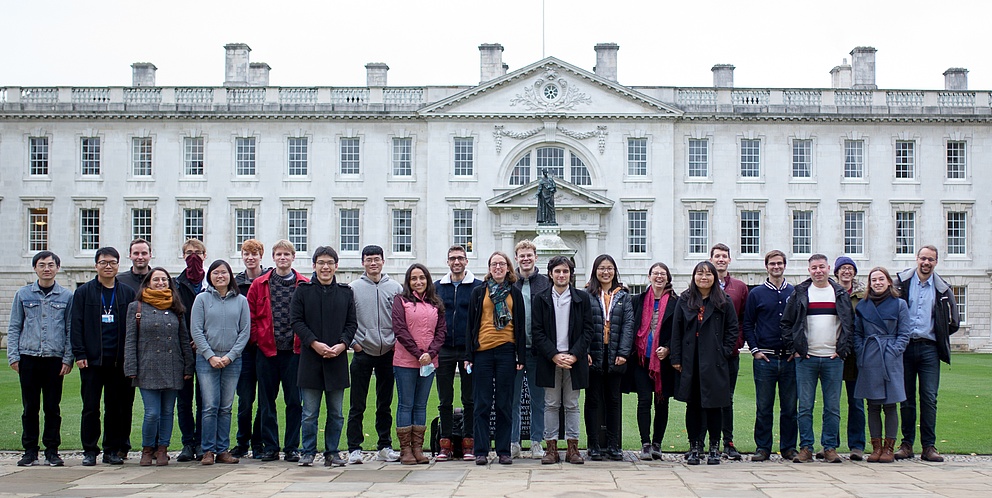
After more than a decade in England, Vignolini finally decided to take up a post in Germany. In early 2023, she became a director at the Max Planck Institute of Colloids and Interfaces in Potsdam, where she has since been heading the newly established department of ‘Sustainable and Bio-inspired Materials’. The researcher has found a home at the institute where her interdisciplinary approach fits in very well. “Although interdisciplinary research does exist in Germany, I believe people tend to focus much more on a single aspect. We are, of course, absolute experts in the field of cellulose materials, but I really like the fact that we can try out different things. Sometimes, for example, I’m interested in finding an exciting research question. And I don’t really mind whether it’s about chemistry or not. I like discovering connections where you solve a problem and that same aspect turns up again in a different system. That is really satisfying for me.”
Being a woman in science
When asked how she, as a woman, navigated various research environments and climbed the academic career ladder, Vignolini replies that she has only recently spoken about it at length for the first time and sorted out her thoughts on the matter.
In Florence, Vignolini studied physics alongside many other women: she estimates that female students made up around 40 per cent, falling to around 30 per cent towards the end of her degree. There were also numerous women amongst the teaching staff, although none of them held a full professorship. During her bachelor’s degree and PhD, Vignolini was not yet aware of the different academic ranks. “I was probably naive because I don’t come from an academic family. I was the first in my family to go to university. I didn’t know what a full professor or an associate professor was. That’s why I didn’t even see this difference at the time.”
Today, Vignolini is very aware of this structural inequality, which she believes has its roots in society and is therefore inevitably reflected in the academic world. She still rarely encounters women in senior academic positions and strongly believes that measures to promote gender equality are essential to create more opportunities for women and other under-represented groups. In this regard, she highlights the efforts of the Max Planck Society to promote greater equality of opportunity.
Host within the Humboldt Network
Vignolini first heard of the Humboldt Foundation whilst she was in Cambridge, when a PhD student at her host institution successfully applied for a Humboldt Research Fellowship. When Vignolini moved to the Department of Chemistry, she met a professor there who was a host for Humboldt Fellows. “When he told me that, I thought: ‘Oh, I’d love to be a Humboldt Fellow too, along with all the others’,” says the Italian researcher.
However, these were not her last links with the Humboldt Foundation: in 2025 she acted as an expert reviewer for the Foundation, and since January 2026 she has been hosting four Chinese Humboldt Research Fellows.
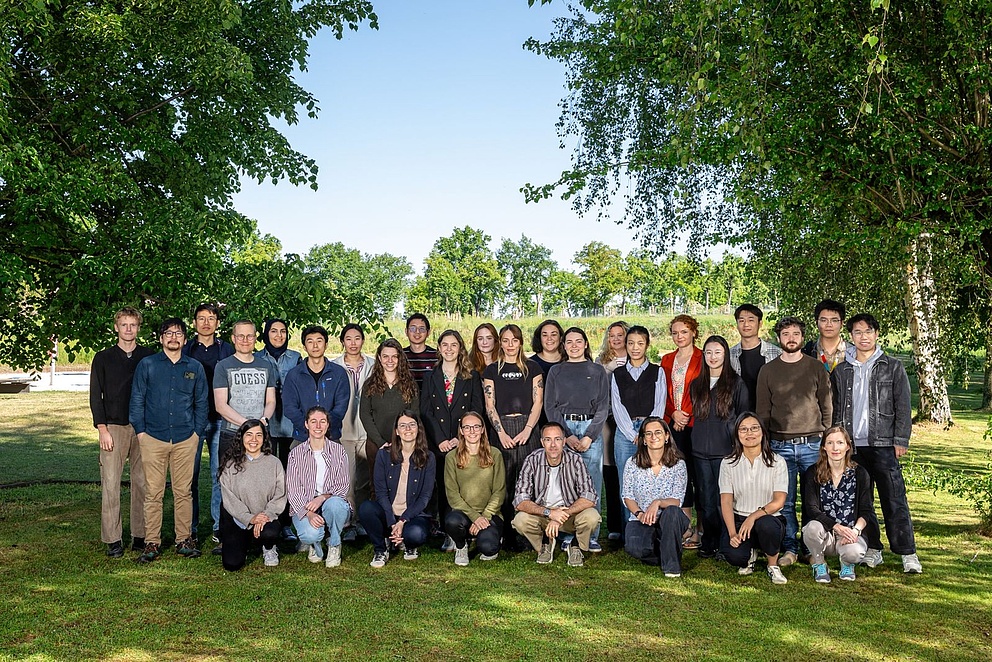
Vignolini’s research group is, on the whole, very international: its members come from countries including China, the UK, Iran, Turkey, Canada, USA, Spain, Italy and Latin America.
According to Vignolini, the coming together of people of different nationalities does make certain aspects of collaboration more challenging, which is why good communication and a respectful attitude towards other cultures are essential. “That is the first thing I tell them when they join us: ‘You may be the best scientist, but if you do not respect and care for others, this isn’t the place for you.’”
At the same time, she observes that members of international research groups support one another much more strongly. Over time, her research group has become a sort of family, in which most look out for one another – a sense of cohesion that is particularly important to Vignolini.
As one might expect, the researcher receives numerous applications from all over the world. To identify the most suitable candidates for her research group, she applies certain criteria. Above all, she prefers emails that are brief but also give an insight into the person’s character. As an example, Vignolini mentions a Canadian who recently joined her group: he had applied to her with the subject line ‘Chitin enthusiast looking for a job’.
Another essential aspect for Vignolini is a good research proposal. “Sometimes people approach me with an idea that isn’t quite fully developed yet. And then you start to discuss the whole thing a bit during the meeting and realise that these people have potential. In that case, I tell them: ‘Perhaps we should think about actually writing the whole thing down and then applying for a fellowship.’ That’s usually how it went with the postdocs who received the Humboldt Research Fellowship, because they had good ideas.”
As an example, she cites Xiaowen Wu, who presented her with an interesting project idea involving cellulose nanocrystals. Vignolini suggested that they work together at the Max Planck Institute to draft the application for the fellowship. Shortly before the application deadline, Wu made an unexpected discovery during his experiments, prompting them to scrap the original project idea altogether. “This case was one of my favourites because, although the project and the plan changed, I think the end result was much better than the original plan. Thanks to the Humboldt Research Fellowship, Xiaowen and I were able to focus entirely on the plan we had proposed.”
What advice would she give to people who are still weighing up whether to take on Humboldt Research Fellows in their group? “If you have someone who has a strong CV and a good idea to go with it, then I simply ask myself: why not? I think it is important to put yourself forward as a host because I believe this fellowship offers a truly unique opportunity for researchers.”
“I think it is important to put yourself forward as a host because I believe this fellowship offers a truly unique opportunity for researchers.”
Vignolini would also like to see even more international researchers join her team at the Max Planck Institute. She sees the Humboldt Foundation’s awards as another great opportunity to achieve this. This year, she herself nominated two people for the Humboldt Research Award and the Friedrich Wilhelm Bessel Research Award. “I believe that these programmes are really wonderful initiatives, and I really like the Humboldt Foundation’s approach because it also plays a key role in shaping the scientific community.”
Sponsored by the



Contact
Press, Communications and Marketing
Tel.: +49 228 833-144
Fax: +49 228 833-441
presse[at]avh.de