
Jump to the content
- {{#headlines}}
- {{title}} {{/headlines}}
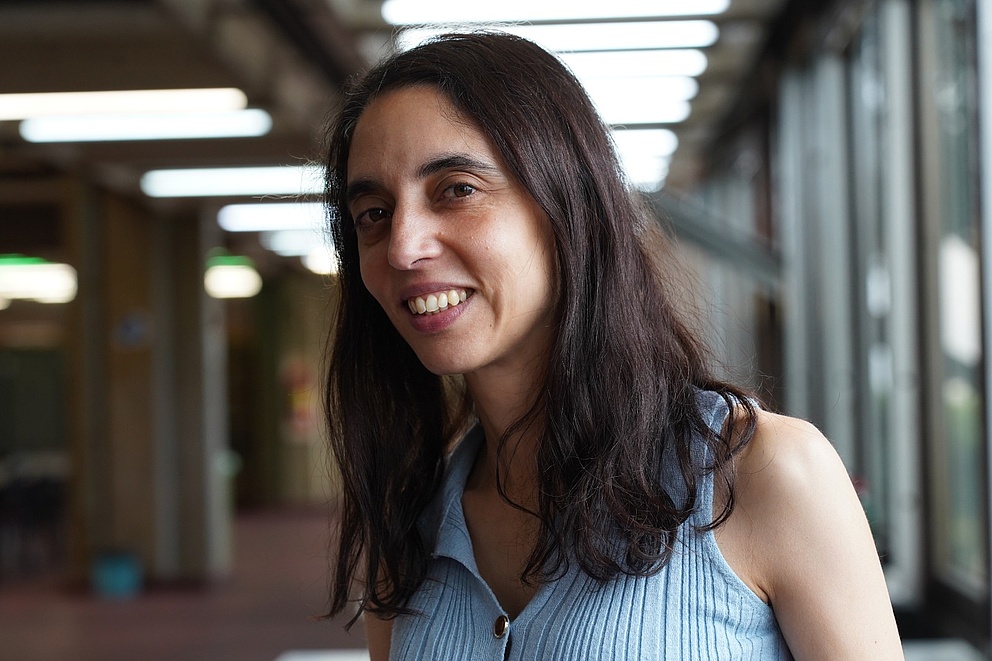
The Argentinian researcher and former Humboldt Research Fellow Paula Tribelli knew from an early age which career path she wanted to pursue: a career in microbiology, with a focus on infections. Despite numerous challenges, she managed to make her dream a reality.
A girl and a dream
Even as a child, Paula Tribelli showed an interest in infections and how to combat them. At the age of five or six, she saw a vaccination being administered on television – and told her mother that she would like to pursue a career in a similar field so that she could help as many people as possible. Her mother was very surprised by her daughter’s ambitions. As the granddaughter of Italian immigrants, Tribelli grew up in a small neighbourhood on the outskirts of Buenos Aires. Her family belonged to the lower middle class in a country where economic, social and political crises repeatedly cast uncertainty over the budding researcher’s career plans. But with a lot of hard work and family support, she managed to pursue her dream – and became the first in her family to go to university.
When she began her bachelor’s degree in biology at the University of Buenos Aires, Tribelli initially thought she would specialise in cancer research. “It seemed like everyone was doing that in the early 2000s; there was a boom in molecular biology at the time. But then I chose microbiology as my subject – and the love I had developed for it as a child came back,” says Tribelli.
She remained faithful to the field of microbiology in the years that followed: her PhD thesis in biotechnology focused on the cold-adapted bacterial species Pseudomonas extremaustralis and how a global regulator influences its physiology.
Applying for the fellowship and pregnancy
Paula Tribelli was at a point in her career where she was longing for a change when she first heard about the Humboldt Research Fellowship. She had already completed two short research stays in Denmark and the USA and was working as a postdoc in the field of biotechnology. “I really wanted to do something different, something that would last longer and have a greater impact on my career. And then a Humboldt alumna recommended this fellowship to me. She sent me a lot of information, and I started doing my own research as well.”
A crucial factor in Tribelli’s decision to apply for the Humboldt Research Fellowship was the comprehensive support available to families, as she was already pregnant at the time of her research. Her husband, who is also a researcher and whom Tribelli describes as very supportive, encouraged her in her plans.
Whilst searching for a suitable institution for a research stay, she came across the Eberhard Karls University of Tübingen, which had been recommended to her as a family-friendly place. She found an international research group based there and got in touch with its head, Friedrich Götz. After several conversations with the senior professor and the submission of a research plan outlining her ideas, Tribelli was offered the research position and was eventually awarded the Humboldt Research Fellowship. In consultation with her host in Tübingen, she waited eleven months before starting. “We both felt it would be better for me if the baby were a bit older, because of the kindergarten. That was a key factor. The foundation has always been very flexible in these things.”
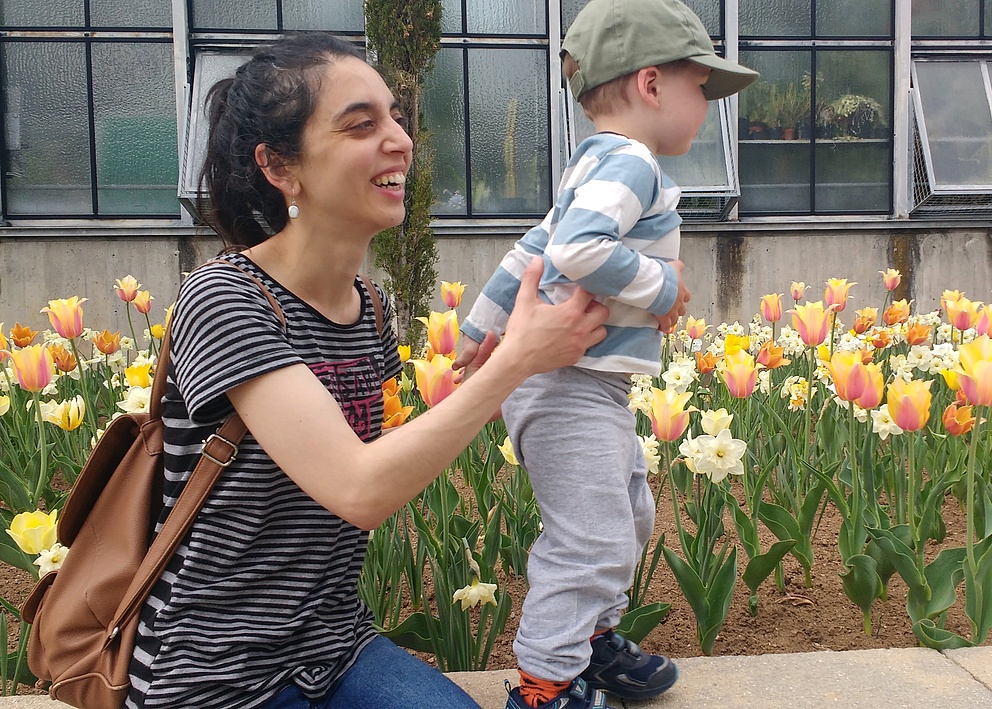
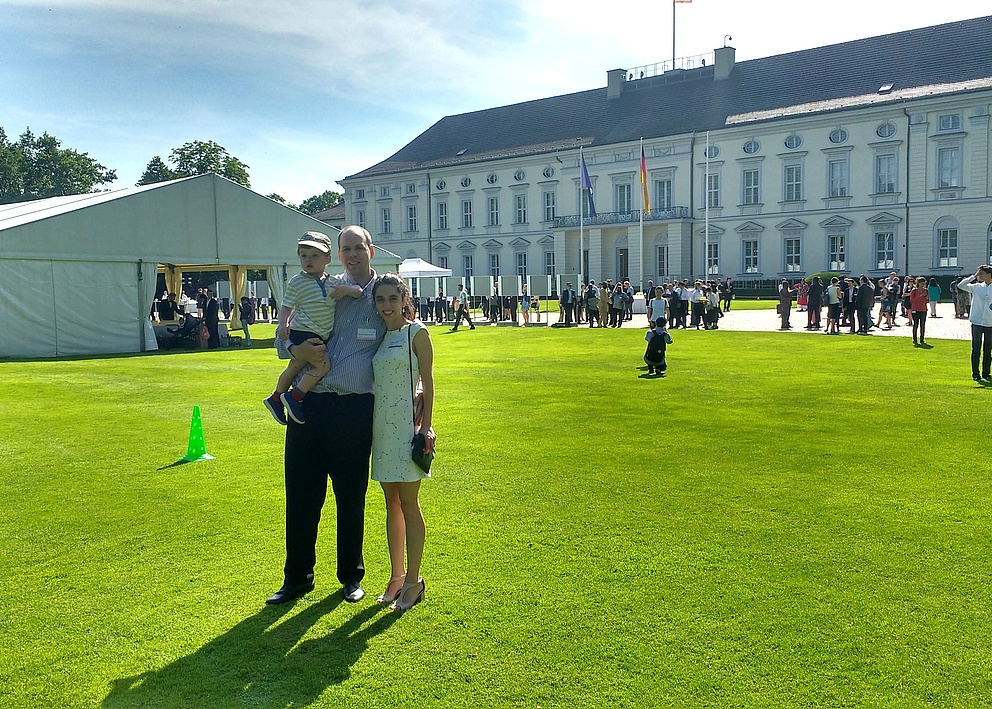
Her husband eventually found a laboratory where he could work as a postdoc in Germany, and in October 2017 the couple set off with their one-and-a-half-year-old son to start a new chapter – on the other side of the Atlantic.
Financial freedom and new horizons
For the researcher, the fellowship was the first time she did not have to worry about money. “For people from countries like mine, the economic situation is always a concern. Half of our thoughts are consumed by financial worries. When I got the Humboldt Research Fellowship, it was the first time I could completely focus on my work and realise my true potential.”
Tribelli spent two years at the University of Tübingen. During this time, she worked with human cells and learnt a great deal about infections caused by the bacterium Staphylococcus aureus. She also co-authored several papers with her colleagues – and later with her host as well. “We discovered a human receptor for a Staphylococcus aureus protein, which enables the bacteria to invade cells and persist there. It was great for me to work on this with my colleagues, I really enjoyed it.”
The microbiologist considers two years to be a good length of time for a research stay, as it greatly broadened her horizons and forged close bonds with her research group – even beyond her time in Tübingen.
“When I got the Humboldt Research Fellowship, it was the first time I could completely focus on my work and realise my true potential.”
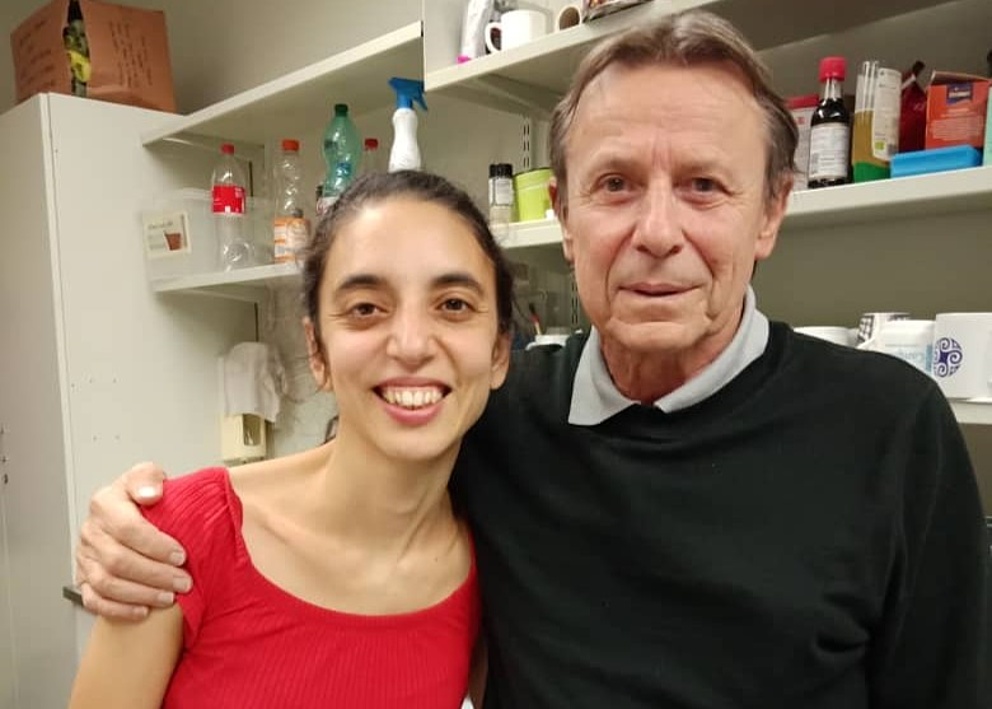
And that initial research visit to Germany was not her only one: Between December 2023 and February 2024, Tribelli undertook another – this time at Ruhr University Bochum under the supervision of Franz Narberhaus.
In the years prior, she had been researching in Argentina how bacteria react to changes in temperature, or rather what happens to them when a person has a fever. The contacts she had made during her time in Tübingen proved helpful here: she sent a postdoctoral researcher to Friedrich Götz’s laboratory to pursue the question further. Together, they published a scientific paper in which they demonstrated that bacteria become more virulent when body temperature rises from 37 to 39 °C. A colleague she had met in Götz’s laboratory, who was conducting similar experiments with mice, arrived at comparable results.
To investigate this further, she got in touch with Narberhaus. Tribelli had heard that he was the head of an excellent laboratory specialising in RNA thermometers. After she had shown the professor the overlapping results she and her colleagues had arrived at, she was offered the opportunity to join the Ruhr University.
During this time, too, Tribelli had her family – now consisting of four members – by her side. As it proved difficult to find a kindergarten spot in Germany for her three-year-old son, the couple took turns looking after him so that both could pursue their research; her older son attended school in Bochum for the duration of their stay.
Her own line of research in Argentina
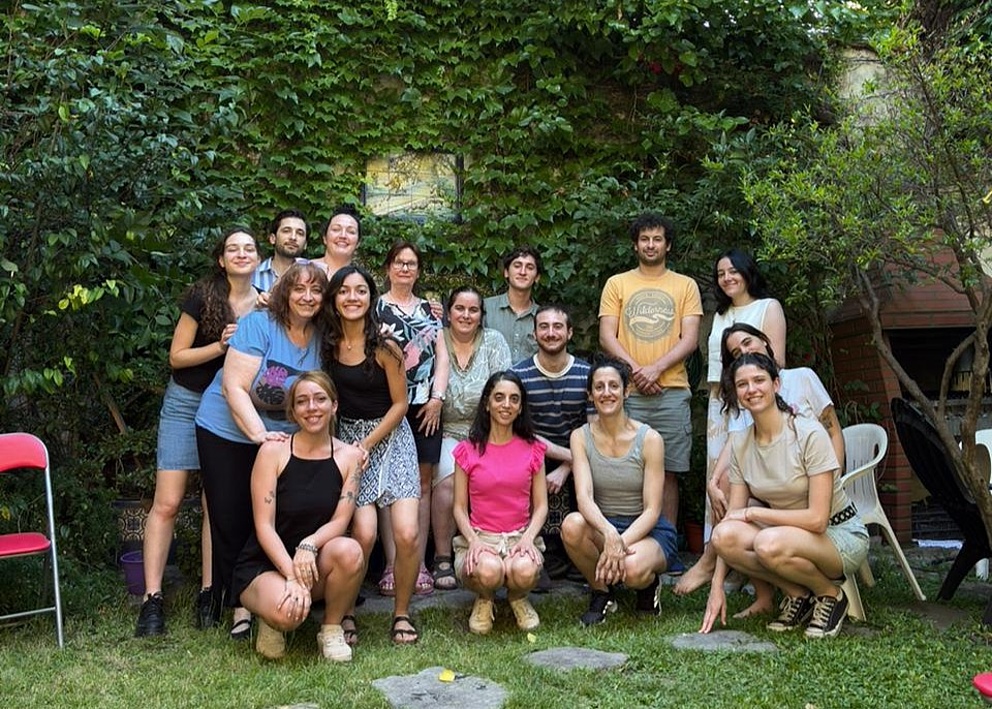
The Humboldt alumna was also able to expand her research at her home institution, the University of Buenos Aires. She works there at the Institute of Biological Chemistry, part of the Faculty of Exact and Natural Sciences (IQUIBICEN-CONICET). Thanks to financial support from the Foundation, the microbiologist succeeded in setting up a research group and acquiring her own laboratory equipment. She also makes this available to others, as it is currently the only equipment in the faculty where experiments can be carried out using human cells together with infected bacteria. For Tribelli, this is a major achievement. “My research stay [in Tübingen] gave me the opportunity to learn new things and develop my own line of research. We have five PhD students and junior researchers here, as well as six undergraduate students, which makes me very happy. I am very satisfied with this stage of my career,” enthuses the Argentine.
“My research stay gave me the opportunity to learn new things and develop my own line of research. […] I am very satisfied with this stage of my career.”
Tribelli and her research group are currently investigating bacterial infections. They are particularly interested in how interactions between different bacteria influence the course of an infection. “We are very much looking forward to studying, for example, how e-cigarettes affect bacteria that are found in the sinuses and can also colonise the lungs – but in healthy people. So, what happens when you start vaping? What happens if the bacteria start to be more virulent, or how does antibiotic resistance play a role in this context?”
Another focus of her work is on children with specific genetic diseases. To this end, Tribelli and her research group work closely with hospitals, from which they regularly receive samples. They analyse these in the laboratory using various experiments and genome sequencing. Their favourite task, she says, is not just to generate a large amount of data, but also to examine it for general patterns – for example, when a child is colonised by certain bacteria and then another bacterium is added.
Connected to the Humboldt Network
Even years after her fellowship ended, Tribelli continues to see how her connection to the Humboldt Network benefits her. For example, the international contacts she made during that time have opened new doors for her. The Argentine will soon be heading to the Centre for Antibiotic Resistance in Tokyo. Her former host, Götz, had introduced her to the centre’s director, with whom she is now collaborating. “Thanks to the Humboldt Foundation, everything is falling into place. The fellowship is a huge opportunity for one’s career.”
In April 2026, Tribelli paid another visit to the University of Tübingen – funded by the Humboldt Foundation, she spent ten days there in Friedrich Götz’s laboratory.
“Thanks to the Humboldt Foundation, everything is falling into place. The fellowship is a huge opportunity for one’s career.”
When applying for a major federal grant awarded through REPARA network (short for “Evolución de la resistencia antibiótica en infecciones crónicas polimicrobianas en Argentina”), Tribelli also noticed that her two-year research stay in Germany made a positive difference; the committee showed particular interest in the Humboldtian because of this period in her CV. A total of four groups from different parts of Argentina applied for the grant – and Tribelli’s group, consisting of herself and three other researchers, was ultimately successful. Thanks to the funding, she is now deputy coordinator of a research programme on rare diseases at her faculty. According to her, it is the first programme of its kind there. Among other things, it enables the awarding of fellowships for undergraduate students, supported by companies. In addition, educational activities on the topic of bacteria can be carried out with children around three to four times a year, aimed at the general public.
Tribelli emphasises that the Foundation has always stood up for her and researchers from Argentina – particularly at times when the academic community there was under severe pressure. The Humboldtian recalls an event in her home country on scientific cooperation between Argentina and Germany, in which she took part as a testimonial. The event had been organised by the main government agency that fosters the development of science and technology in Argentina, CONICET, and the Humboldt Foundation. At the event, representatives of the Humboldt Foundation and other German scientific institutions had emphasised to Argentinian politicians the significance of scientific exchange and the important role of researchers. “For us Argentinian Humboldtians, that was very important. Because I felt that we still have someone supporting us – even if they are in another country.”
What advice would Tribelli give to other female researchers considering applying for a scholarship? “Don’t be afraid. The fellowship will give you the support you need to realise your potential and show yourself that you can do it. Especially if you come from a developing country, I know that opportunities are becoming fewer, and the difficulties become more every year. So: Go for it and just apply!”
Sponsored by the



Contact
Press, Communications and Marketing
Tel.: +49 228 833-144
Fax: +49 228 833-441
presse[at]avh.de