
Jump to the content
- {{#headlines}}
- {{title}} {{/headlines}}
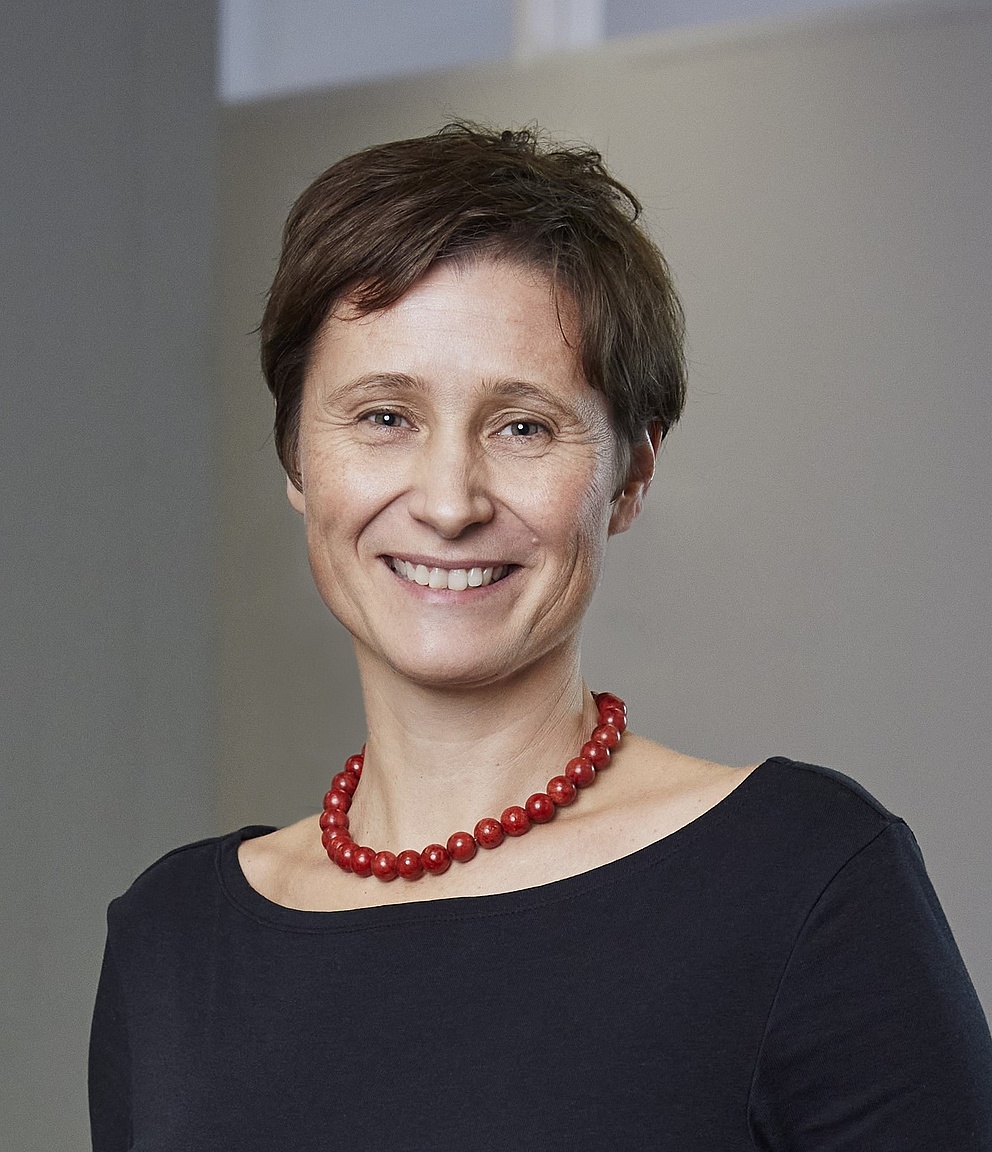
Bettina Frohnapfel is a professor of fluid mechanics and the first woman on the faculty board of mechanical engineering at Karlsruhe Institute of Technology (KIT). Under the Henriette Herz Scouting Programme, she recruited the Spanish researcher Patricia Sújar-Garrido to become a fellow at KIT. Together with her and two other colleagues, Frohnapfel recently published an article in the leading journal in her field. It is her first publication authored exclusively by women – not least thanks to Humboldt Foundation sponsorship.
Following the flows
The engineer, Bettina Frohnapfel, investigates the friction between fluid flows and solid surfaces. She aims to discover how friction losses can be reduced. Her results could help to design flows and surfaces in such a way that planes or ships, for example, would use less energy.
Together with three female co-authors she recently published an article on the way surface roughness affects friction in the Journal of Fluid Mechanics. Such roughness is caused by corrosion or deposits which change the properties of a surface. In their experimental work, the researchers investigated how areas of varying roughness on a surface influence overall flow resistance.
Frohnapfel explains that flow mechanics differentiate between laminar and turbulent flows. At KIT, she and her colleagues focus on turbulent flows. Whilst laminar flows move in a uniform, orderly manner, turbulent flows are characterised by irregular, chaotic movements.
Her interest in these kinds of flow was sparked when she was still an undergraduate. She first encountered the topic of turbulence whilst studying chemical engineering at the University of Erlangen-Nürnberg (FAU). At the time, she was taking part in a summer school organised by the German Academic Exchange Service (DAAD) and led by her professor and subsequent doctoral supervisor. Students working in the field presented topics they had prepared at the event. For the first time, she delved into turbulence – and remained loyal to this field of research for many years.
From postdoc to professor
Frohnapfel already knew about the Humboldt Foundation, so having completed her doctorate in 2007, she applied to the Foundation for a research fellowship from the Japan Society for the Promotion of Science (JSPS). “In Erlangen, where I did my doctorate, there were lots of Humboldt Fellows. It was an established practice at the institute,” says the fluid mechanics engineer.
Back in Germany, Frohnapfel was accepted into the Robert Bosch Foundation’s fast-track programme. From 2008 to 2010, she was one of 20 female researchers in STEM subjects (Science, Technology, Engineering, and Mathematics) selected for the programme. Apart from the fascinating short seminars, she especially remembers the mutual support and close interaction with the other participants.
“Initially, hardly anyone had children. That gradually changed because we saw that the others were managing to do both. It’s a really important point: a network where you see that family and career can be combined in science, too.”
From 2010 to 2012, Frohnapfel headed an Emmy Noether Junior Research Group on “Viscous Flow Control” at TU Darmstadt. Then, in 2012, she was finally appointed to a professorship at KIT, a year after giving birth to her first son who was followed by a second in 2014.
Asked how she managed to cope during this period, Frohnapfel explains that her husband took a year’s parental leave for each child. His position at a university of applied sciences allowed him the necessary flexibility. Moreover, at KIT, she was allowed to have a baby’s cot in her room so that she could also care for her second son in his first months during working hours. Nevertheless, this phase was undoubtedly very tiring and pushed her and her husband to their limits.
Though tenured, a few years later, the engineer applied for one of the Humboldt Foundation’s Feodor Lynen Research Fellowships. This enabled her to spend four months in 2017 working on research at the Royal Institute of Technology (KTH) in Stockholm.
“The whole family came along, and it was perfect! The children went to a Swedish kindergarten and my husband also found a position for a few months at KTH. It was a fantastic time for us.”
Thanks to the fellowship, Frohnapfel gained valuable input for building her institute in Karlsruhe. She also formed close ties with her Swedish research group and made many contacts that have lasted to this day. It was through these contacts that she was later introduced to her future fellow.
Scouting for the Humboldt Foundation
When Frohnapfel originally applied to become a Humboldt Foundation scout, she didn’t have any particular nominee in mind. But she liked the concept of the Henriette Herz Scouting Programme. “It’s an exciting idea that you can approach researchers quite informally and say, ‘We have an offer to make you. Would you like to join us?’ It’s something that’s often missing in our portfolio. I also really appreciate the enormous trust that is put in us scouts to choose the right person.”
“I really appreciate the enormous trust that is put in us scouts to choose the right person.”
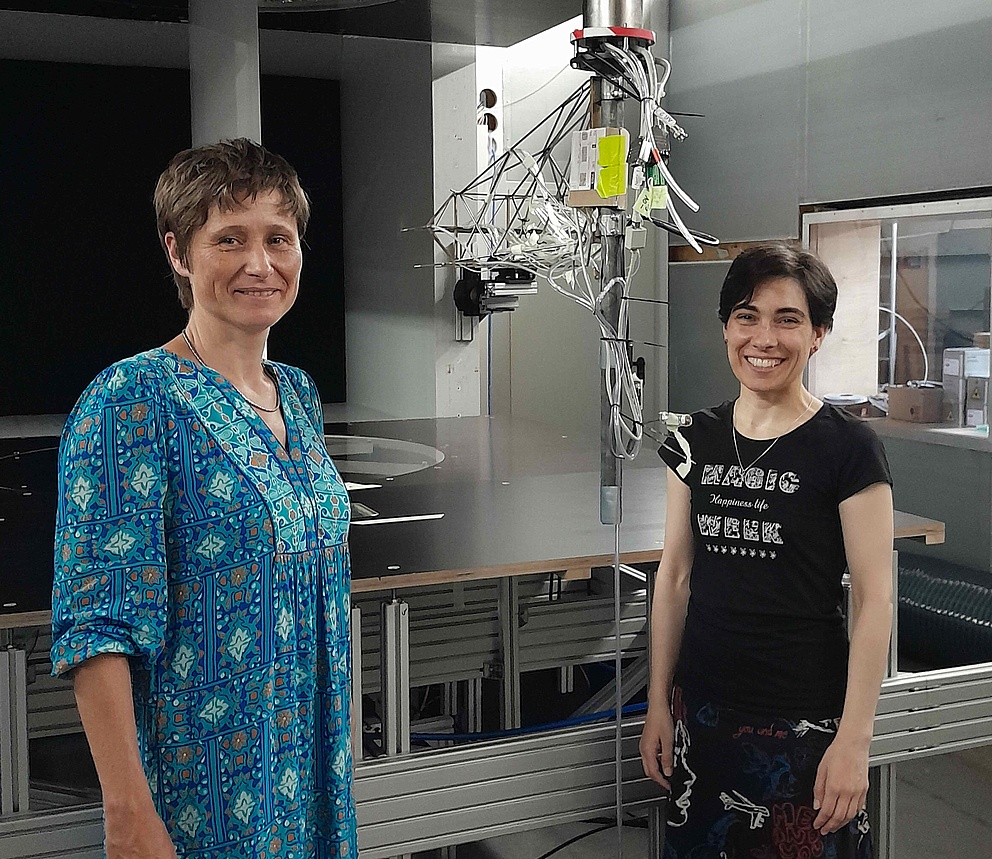
Frohnapfel became a scout in 2021 and nominated the Spanish fluid mechanics engineer, Patricia Sújar-Garrido, for a Humboldt Research Fellowship. The choice fell on the experienced researcher because she had extensive expertise in measurement technology and complemented the institute’s range of competence. At the time of accepting, Sújar-Garrido had a tenured position at KTH in Stockholm and was given leave of absence to spend three six-month periods from 2023 to 2025 working on research in Karlsruhe. During this period, Frohnapfel closely mentored her and published the joint article already mentioned above.
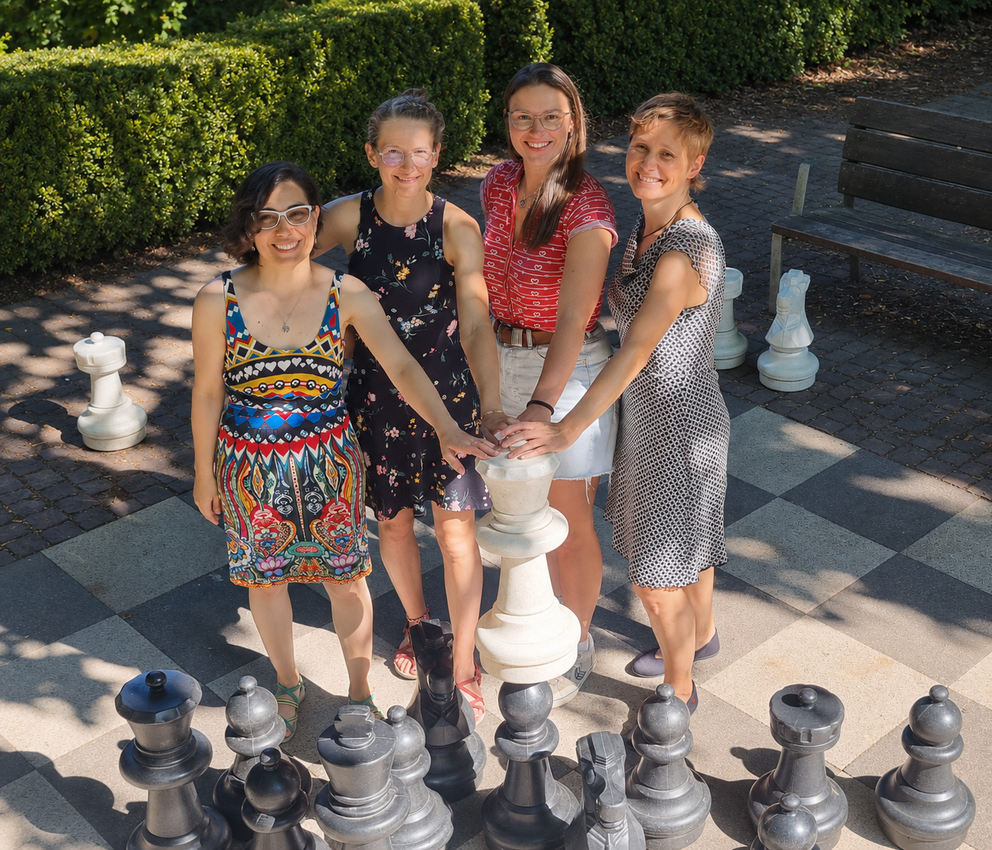
Frohnapfel reckons the whole project, from the very beginning through the initial measurements up to publication in June 2026, took about three years. She is particularly proud to have published an academic paper for the first time exclusively authored by women.
Promoting women and diversity
Today, Frohnapfel officially heads a research group at KIT with around 20 doctoral students. The group is very international and currently consists of people from Italy, the United Kingdom, Canada, and Germany. The professor cherishes this diversity. “I find it rewarding to have people with an international background in the research group. They bring along different perspectives, perhaps because they have learned things a bit differently. That’s really helpful.”
In choosing new group members, however, Frohnapfel does not only prioritise their specialist qualifications. It is just as important to her that the human chemistry works. She therefore recommends potential hosts to invite candidates for a couple of weeks in advance, for example, to discover how well they get on together in day-to-day research.
Moreover, the fluid mechanics engineer focuses primarily on experienced female researchers in her field because she has observed that their career prospects often decline over time. “Especially in the international context, I often observe that women who are classed as high potentials when they are postdocs get a tenured position relatively quickly. But that’s when the real challenge begins: they have to hold their own in a highly competitive environment. In my view, this is precisely where we have a responsibility to support the next generation. And this is where Humboldt Foundation sponsorship is so crucial: it helps women to establish themselves in research and build their own networks. Above all, I find the fellowships for experienced researchers really relevant.”
“This is where Humboldt Foundation sponsorship is so crucial: it helps women to establish themselves in research and build their own networks.”
In addition to her work at KIT, Frohnapfel also strives to promote women in engineering: since 2024, she has been the spokesperson of the Review Board on Fluid Mechanics, Technical Thermodynamics and Thermal Energy Engineering at the German Research Foundation (DFG). In March 2026, she helped organise the first meeting of female fluid mechanics engineers. There were enough participants, she reports, to fill a small room – something that has never happened before. At this meeting, a striking number of women fluid mechanics working in Germany reported on unexpected difficulties in advancing their careers, particularly on the path to a professorship.
Frohnapfel is convinced that a Humboldt Foundation fellowship for experienced researchers from Germany could open up new opportunities for their scientific careers. “I think it’s brilliant that the fellowships are granted to individuals rather than being tied to specific topics. You can find topic-related funding in many places – here, the focus is on the person. I think it’s a fantastic award because the selection process is competitive and the fellowships have an international reputation. So, to be included in this network is really valuable for your own biography.”
Sponsored by the


Contact
Press, Communications and Marketing
Tel.: +49 228 833-144
Fax: +49 228 833-441
presse[at]avh.de