Jump to the content
- {{#headlines}}
- {{title}} {{/headlines}}
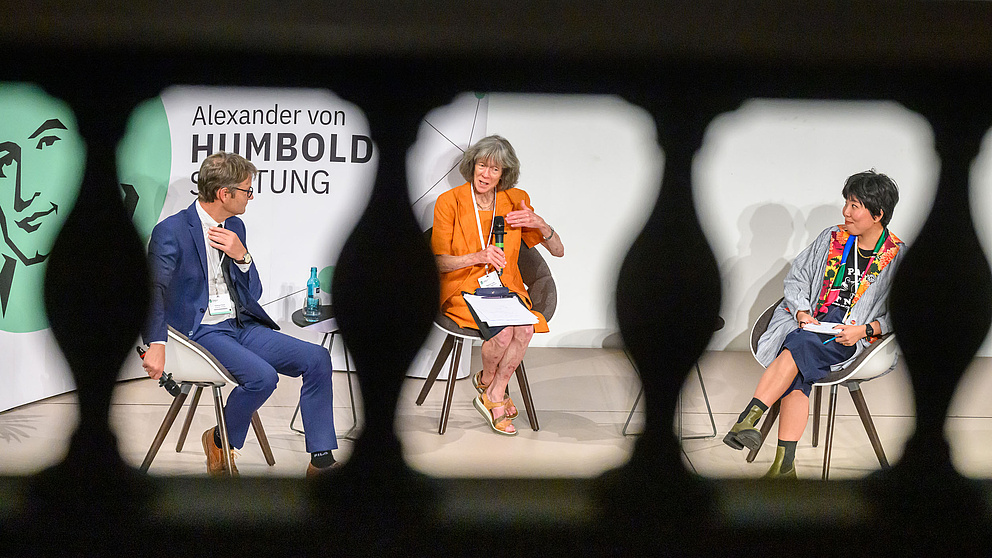
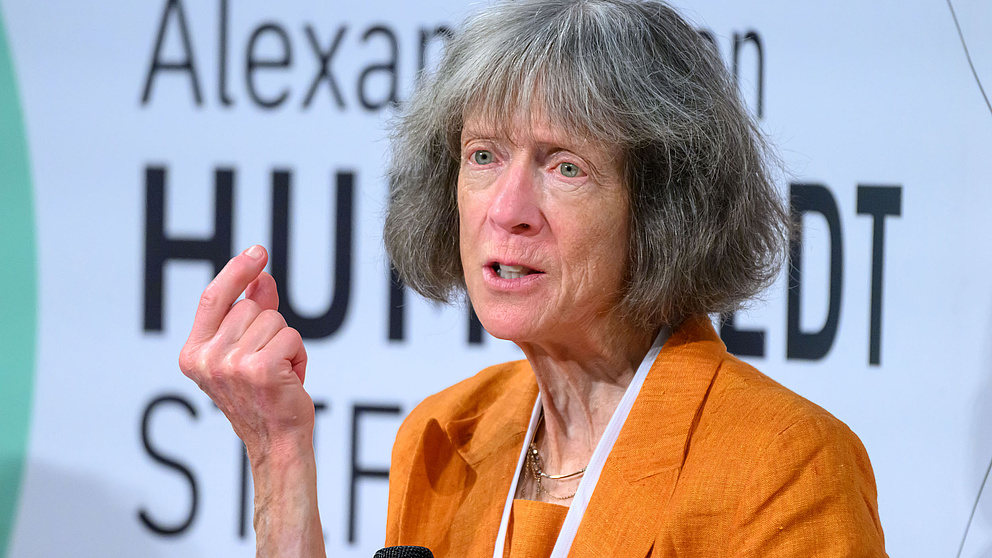
The subject of this year’s Kosmos Lecture could not have been more pertinent: the Irish social philosopher Maeve Cook spoke about the potential and limits of political participation.
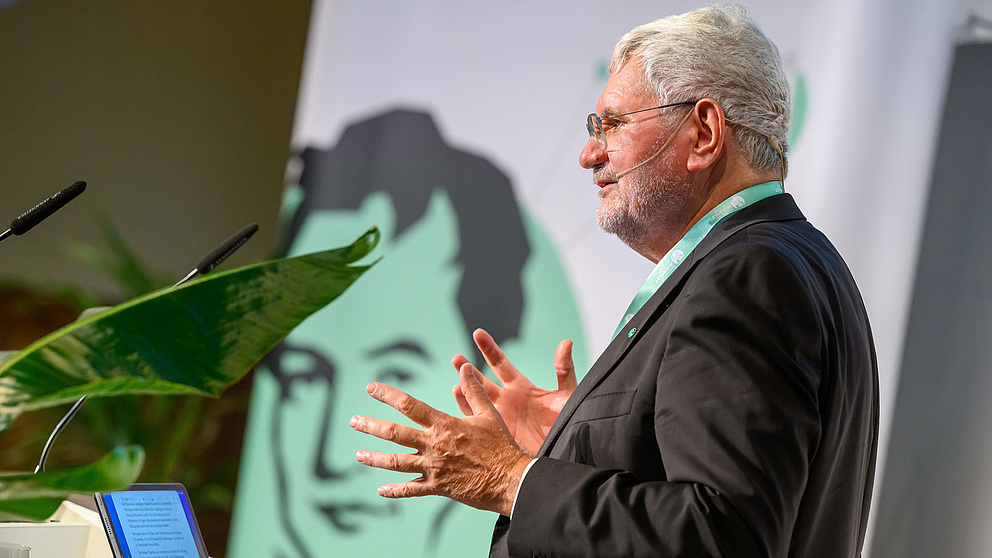
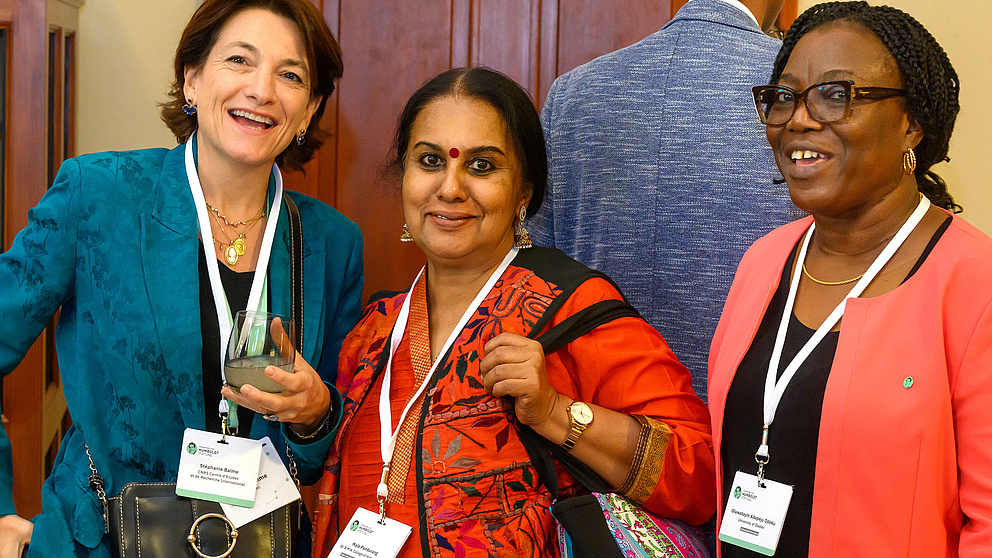
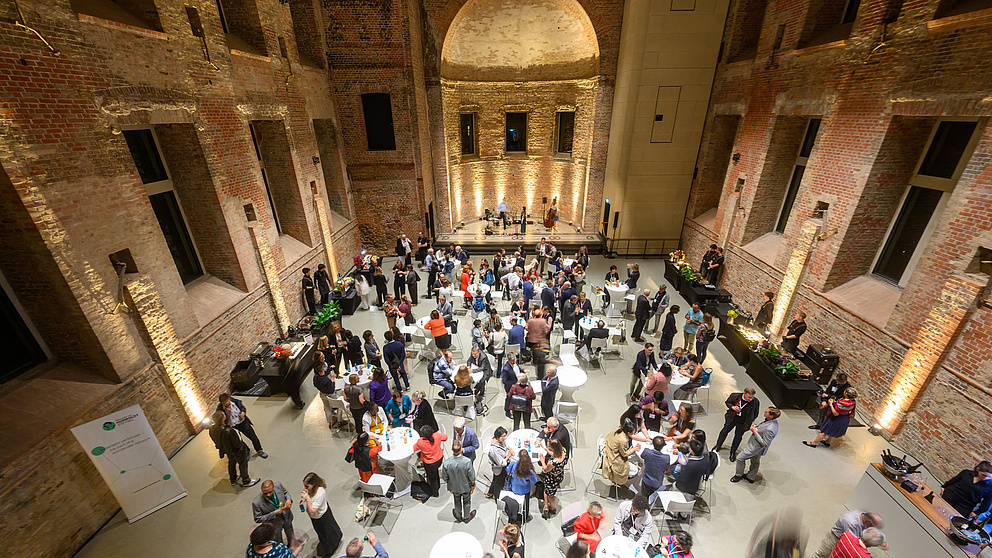
Two hundred and fifty international guests from academia, the political arena and business as well as Humboldtians currently staying in Germany met at the Humboldt Foundation’s late summer reception in Berlin. Just a few days after the Saxony-Anhalt state election, the Foundation’s president, Robert Schlögl, expressed his concern about the election results. “For a science organisation like us, and for me personally, this election result is not just another political event. If a party that is monitored by the Office for the Protection of the Constitution and classified as definitively far-right, partly because it questions fundamental democratic principles, were to come to power by democratic means, this would alter the conditions under which academia can operate.”
Schlögl emphasised the importance of academic freedom for democracy. “It is the guarantor of the good, productive science that we need so urgently in times of system rivalry and ruthless economic competition.” He called on everyone to campaign for academic freedom and open international exchange – including that international students and researchers could continue feeling welcome in Saxony-Anhalt.
Academic freedom is the guarantor of the good, productive science that we need so urgently in times of system rivalry and ruthless economic competition.
In her Kosmos Lecture, Maeve Cooke formulated the “dilemma facing advocates of democracy”: humanity was confronted by challenges that demand fast action – such as the ecological disaster. But participative democratic processes take time, she averred.

How can this contradiction be resolved? Cooke argues for continuing to develop democratic institutions and practices in order to counteract democratic alienation. Digitalisation, which on the one hand accelerates these developments, also holds the potential to facilitate new forms of participation.
A Humboldt Research Award winner, Cooke is one of the most eminent international voices in social and political philosophy. She is a professor of philosophy at University College Dublin and is currently conducting research in the Department of Philosophy at Humboldt-Universität zu Berlin.
Cooke subsequently discussed what new forms political participation could take with participants in the Humboldt Residency Programme “Democracy 2.26: Designing Political Participation.” The transdisciplinary group of researchers, journalists, artists and activists from ten countries has spent six weeks in Berlin and Brandenburg exploring the question as to how political participation can be re-crafted. The Kosmos Lecture marked the end of the residency phase of the programme, which is funded by the Federal Foreign Office.