ComLab#9: Contested Freedom – from Migration to AI and the Climate Crisis
19 – 22 September 2024, Berlin
Last change:


19 – 22 September 2024, Berlin
Last change:
News
From 11 to 13 May 2023, researchers from the Humboldt Network and alumni of the International Journalists’ Programmes shared views on how innovative research in the life and natural sciences can be communicated – clearly, comprehensibly and appropriately for the target group.
Last change:
How AI, Robotics and Digitalisation Transform Our Lives
Last change:


The next Communication Lab will take place in Berlin in the fall of 2025 on sustainable innovation in healthcare, environmental research and technology.
Last change:


News
The dream of a long, healthy life depends on all of us. The tenth Communication Lab revealed that the real fountain of youth is not a new magic pill but our lifestyle – and above all, good social connections.
Last change:
The research conducted by the chemist and materials scientist Christopher Barner-Kowollik facilitates the development of high-precision materials and surfaces for specific applications in medicine, nanotechnology and materials development. He is invited to continue his work on new materials and polymer-based systems at KIT.
Last change:
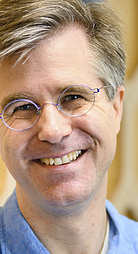

Cancer cells grow significantly quicker in the body than normal cells. Their metabolism thus functions differently and utilises nutrients at a much faster rate. The metabolism researcher Christian Frezza is searching for ways of disturbing or even preventing nutrient utilisation in cancer cells so that they can no long grow and eventually die.
Last change:

News
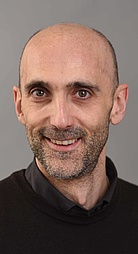
Ryan Sweke, holder of the BMFTR-funded German Chair for Mathematics and its Applications, brought together the world's leading experts in the field at AIMS in Muizenberg: an opportunity for networking, and not just for young African talent!
Last change:
News
Further strengthening of scientific relations between Germany and Canada additionally reinforced by Memorandum of Understanding
Last change:
Magazine Humboldt Kosmos
Artificial intelligence can boost development in poor countries and promote international cooperation when language barriers fall. Gaurav Sharma from India is exploring the regulatory hurdles that have to be overcome for this to happen.
Last change: