Press Release
Science diplomacy and security go hand-in-hand
Humboldt network contributes to Germany’s National Security Strategy.
Last change:
Press Release
Humboldt network contributes to Germany’s National Security Strategy.
Last change:
News
The opening of the Humboldt Foundation’s Annual Meeting on 28 June 2023 will be broadcast via livestream. Please join us!
Last change:
Event
Last change:
On 23 and 24 May 2023, some 350 people gathered at the Philipp Schwartz and Inspireurope Stakeholder Forum in Berlin to discuss issues revolving around scientific and academic freedom. The event is organised every year by the Alexander von Humboldt Foundation and partners of the EU-financed Inspireurope project.
Last change:
Press Release
Five top international researchers to receive Germany’s most valuable research award
Last change:
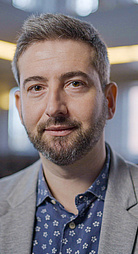
Peter N. Robinson is a pioneer in the computer-assisted genome and phenotype analysis of genetic diseases. His major work has been the development of the Human Phenotype Ontology, which is now a standard tool used internationally to diagnose gene-related diseases. At the Charité in Berlin, Robinson is invited to develop algorithms for AI-based precision medicine.
Last change:
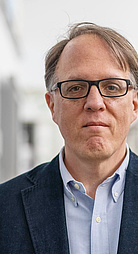

F. Ömer İlday has played a seminal role in developing ultrafast laser technology, transforming the field of non-linear laser-matter interactions in the last few years. He is now invited to join Ruhr-Universität Bochum to explore new research fields in materials science and establish a world-class research centre.
Last change:
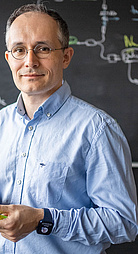

Arnim Wiek is a world leader in sustainability science and has played a seminal role in shaping its development. At the University of Freiburg, Wiek is invited to establish a Center for Sustainable Food Economy that will create synergies between existing research activities both there and at other universities in the tri-national Upper Rhein region. He will also help to reinforce efforts to internationalise sustainability research in Germany.
Last change:
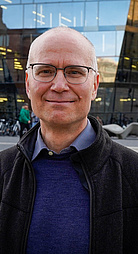

The physicist and electrical engineer, Juan Daniel Prades Garcia, is an expert on semiconductor technologies and metrology. He is invited to Braunschweig to establish a research focus on ubiquitous metrology with the aim of developing highly sensitive quantum and nano sensors that can be used to reliably and comparatively measure the tiniest particles outside the lab.
Last change: