
Jump to the content
- {{#headlines}}
- {{title}} {{/headlines}}

Contact
Press, Communications and Marketing
Tel.: +49 228 833-144
Fax: +49 228 833-441
presse[at]avh.de

The Alexander von Humboldt Foundation has provided funding from the Global Minds Initiative Germany for the first 74 researchers. Sixty-six of these individuals are receiving a Humboldt Research Fellowship. Another five are coming to Germany with funding provided through a Humboldt Research Award and three with funding from a Friedrich Wilhelm Bessel Research Award. The recipients hail from 25 countries, including Canada, Chile, China and the USA.
The additional funding the initiative is providing enables the Humboldt Foundation to respond to the strong demand from abroad and a record-breaking number of outstanding applicants by awarding more Humboldt Research Fellowships, Humboldt Research Awards and Friedrich Wilhelm Bessel Research Awards in a first step. More fellowship and research award recipients will be selected under the Global Minds Initiative Germany in the coming months. It is expected that it will be possible, starting in 2026, to implement further funding options and programme lines that are currently being negotiated.
Speaking about the start of funding activities for top international talents, Federal Minister of Research Dorothee Bär underscored: “We launched the Global Minds Initiative Germany last summer and I am very pleased that we are already welcoming the first funding recipients to Germany. They are an enormous gain for our science system. With their experience, their expertise and their research projects, they will enrich Germany as a location for conducting research and will help boost our international competitiveness. The strong demand shows that our programme has attractive offerings and comes at exactly the right time. In Germany, we have excellent conditions for conducting research. On top of this, academic freedom is enshrined in our constitution – this is our big advantage and we champion it.”
Robert Schlögl, president of the Alexander von Humboldt Foundation, says on the programme start: "The reasons why researchers apply for a fellowship in Germany and from the Humboldt Foundation are individual and diverse. The initial feedback we have received from new recipients should be encouragement and, at the same time, show what we should continue to promote and defend here: academic freedom, Germany’s attractiveness as a location for conducting research, and open-minded, international collaboration.
Which is why I am so pleased that the Humboldt Foundation can now provide concrete support within the Global Minds Initiative Germany. With the help of our flexible funding opportunities we can offer outstanding researchers a temporary base in Germany and initiate long-term collaborative activities."
Comments from new funding recipients
Turkish medical informatics specialist Sevgi Gökçe Kafalı earned her doctorate in bioengineering at the University of California, Los Angeles (UCLA). She is conducting research at the Technical University of Munich with a Humboldt Research Fellowship under Humboldt Professor Daniel Rückert. Her research interests include magnetic resonance imaging (MRI), particularly deep-learning based super-resolution and image reconstruction using motion correction.

Dr. Sevgi Gökçe Kafalı: “As Germany is one of the leading countries in magnetic resonance imaging research, offering solid industry-university partnerships, it was an organic transition for me to move here. Germany provides an open and supportive research environment that encourages independent thinking and interdisciplinary collaboration. This independence is essential for innovative and impactful scientific work, especially in a rapidly evolving field such as artificial intelligence in medicine.”
Chilean psychologist Víctor Hugo Masias Hinojosa is conducting research at Charité Berlin with a Humboldt Research Fellowship. He focuses on Computational Social Sciences, particularly the analysis of social structures and social inequalities.
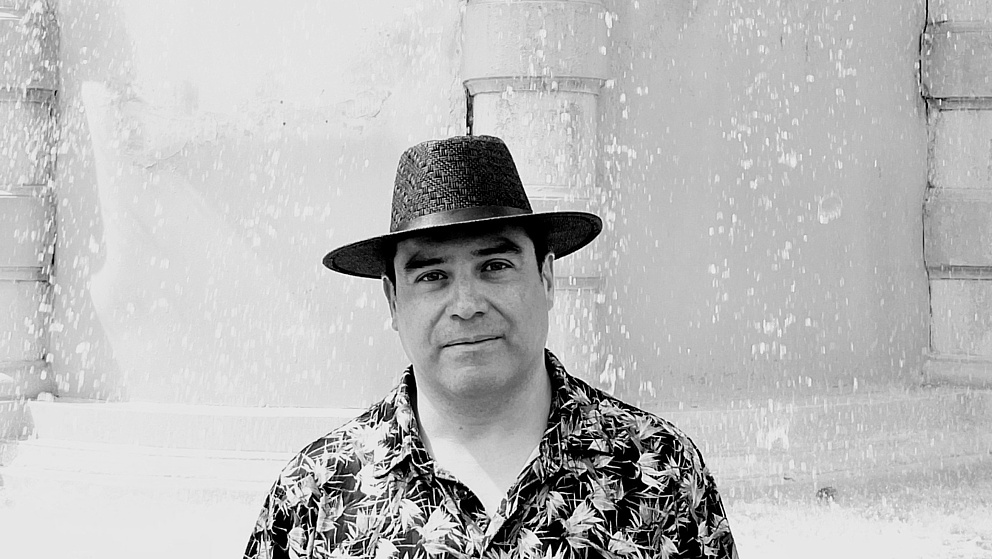
Dr. Víctor Hugo Masías: “I believe that academic freedom is just as important as freedom of speech because both are necessary for ethics-guided research. The Humboldt Foundation is known around the world for giving people the opportunity to conduct research which is driven by intellectual curiosity. This kind of climate reduces restrictions and fosters innovation. That was an important reason why I decided in favour of Germany and against other countries where research is possibly subject to external or short-term interests.”
Donna Whitney is a professor in the Department of Earth & Environmental Sciences at the University of Minnesota, USA. The geologist is interested in using metamorphic rocks to reconstruct the chemical and physical processes that drove metamorphism in continental and oceanic crust. As part of the Humboldt Research Award, she is visiting Max Wilke at the Institute of Geosciences at the University of Potsdam.
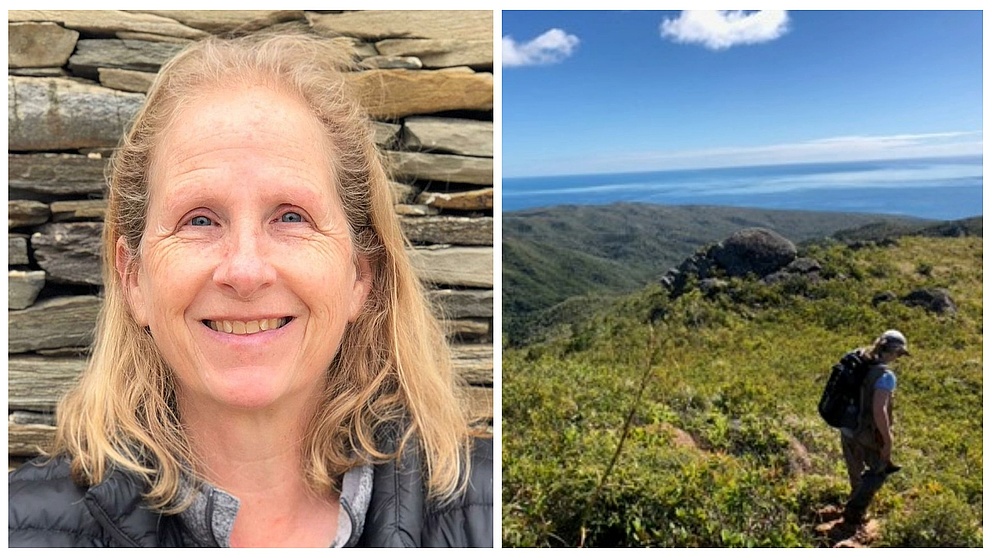
Prof. Dr. Donna Whitney: “The recent decline in support for scientific research in the US has increased my interest in spending more time in a place that values scientific research. A research stay in Germany also allows for access to state-of-the-art facilities with excellent technical support and a chance to interact with many interesting scientists in my field and in related fields.”
Historian Joris Mercelis is investigating the internationalization of research and development (R&D) activities in the photographic industry. Before coming to Heinrich Heine University Düsseldorf on a Humboldt Research Fellowship, the Belgian scholar was an assistant professor at Johns Hopkins University in Baltimore, USA.
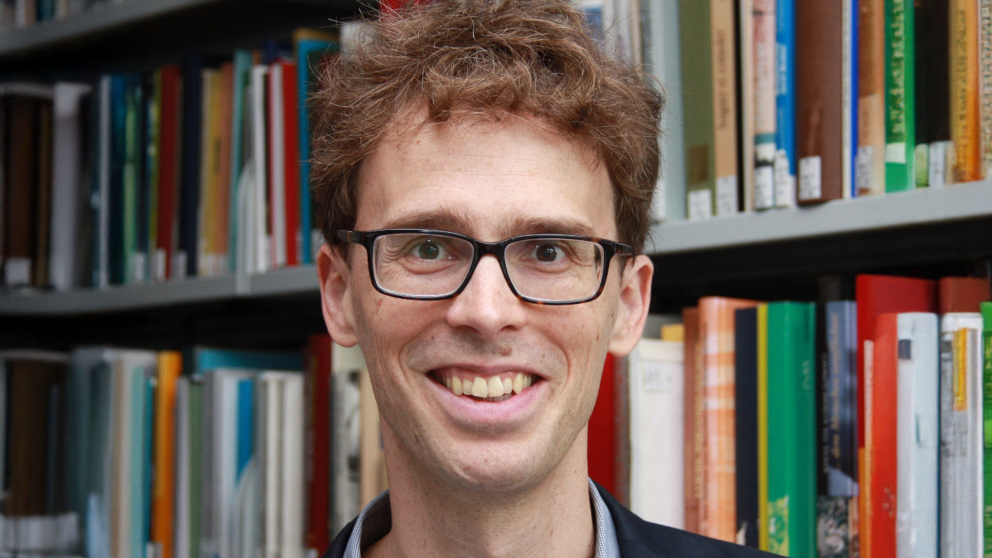
Dr. Joris Mercelis: “I decided to undertake a research stay in Germany because even though there’s Zoom, physical proximity makes a big difference. German sources and contacts are particularly important for my current research project about the history of chemistry and photography. At the same time, I want to get better acquainted with the German research environment. I am seriously concerned about the impact that the Trump administration’s encroachments on freedom of science are having and I am very grateful to be able to spend this academic year in Germany.”
Rui Zhu is currently a postdoctoral researcher at the University of California, Santa Barbara, USA. As part of the Humboldt Research Fellowship, he will conduct research at the Institute of Urban and Industrial Water Management at Dresden University of Technology. In his research project, he is investigating how the movements of a swarm of small aquatic organisms (mesozooplankton) influence the hydrodynamics and mixing of the ambient flow.
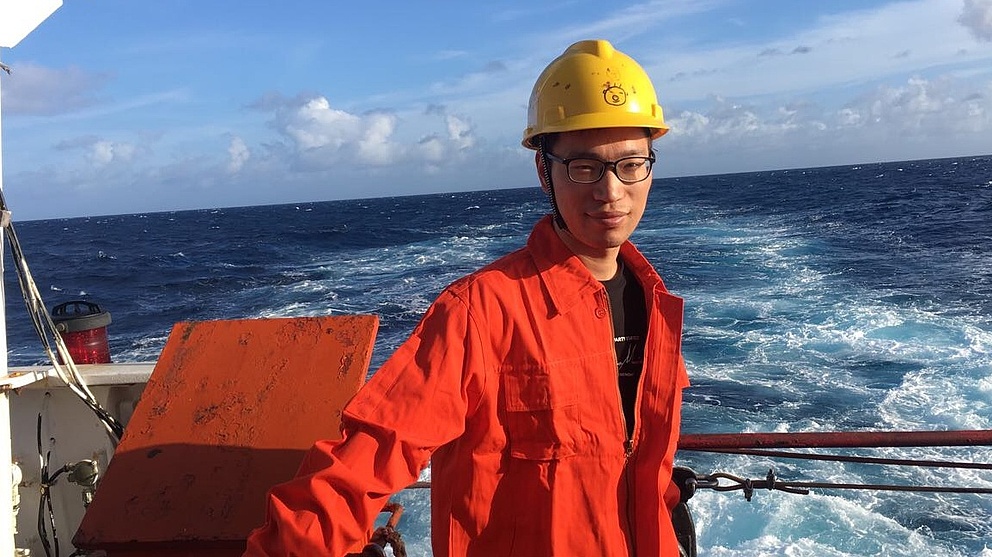
Dr. Rui Zhu: “Germany is one of the most attractive places for research worldwide. I applied because I wanted to collaborate with leading scientists. Academic freedom was also a key reason. It helps researchers explore new ideas with confidence and encourages innovation in different areas. I look forward to building long-term collaborations that connect researchers from Germany and China, helping us address shared environmental challenges together.”
The Global Minds Initiative Germany
The Global Minds Initiative Germany programme was launched in July by the Federal Ministry of Research, Technology and Space (BMFTR). It aims to offer a safe haven of academic freedom and prospects in Germany to international researchers at various stages of their careers and, in the process, strengthen the country’s high-tech agenda and raise its profile as an attractive location for conducting research. The Global Minds Initiative Germany draws on programmes operated by the Humboldt Foundation and the Deutsche Forschungsgemeinschaft (DFG) and on offerings from the German Academic Exchange Service (DAAD) for students and doctoral candidates.
About Humboldt Research Fellowships and Awards
Humboldt Research Fellowships for researchers from all nations and disciplines enable postdocs and experienced researchers to conduct research in Germany for up to 24 months – and additionally offer them flexible options as alumni throughout their lives.
The Humboldt Research Award honours internationally leading researchers in all disciplines from abroad for their overall achievements. In addition to €80,000, the award winners also receive an invitation to conduct a research project of their own in Germany together with colleagues here.
The Humboldt Foundation awards the Friedrich Wilhelm Bessel Research Award for outstanding research work by junior researchers from abroad. Each award is endowed with €60,000 and a research stay in Germany.
Every year, the Alexander von Humboldt Foundation enables more than 2,000 researchers from all over the world to spend time conducting research in Germany. The Foundation maintains an interdisciplinary network of well over 30,000 Humboldtians in more than 140 countries around the world – including 64 Nobel Prize winners.