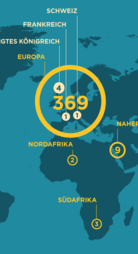
1507 search results

Sorted by: last change
    • Angela Schoellig

      Whether you think in terms of autonomous drones, self-driving cars or robots that care for the sick or support older people, machines constantly have to respond to new and unexpected situations. Not all of these situations can be predicted and programmed with the appropriate default response. Machine learning and robots that learn from their experience are the solution.

      Last change:

      Angela Schoellig
    • Hanna Kokko

      Hanna Kokko enjoys a worldwide reputation as a theoretical biologist. With her arrival, Johannes Gutenberg University Mainz is set to become an internationally recognised centre for theoretical biology.

      Last change:

      Hanna Kokko
    • Tina Malti

      How do war and violence affect children psychologically? And how can children overcome such traumas? These are the kind of questions the psychologist Tina Malti explores in her research on childhood development. As the new director of the Leipzig Research Center for Early Child Development (LFE), she will be able to boost the centre’s international repute.

      Last change:

      Tina Malti
    • Ingmar Weber

      Ingmar Weber conducts research at the interface of the social sciences and artificial intelligence. He uses statistical methods to analyse data generated by social platforms in order to make statements about political polarisation or to model migration movements.

      Last change:

      Ingmar Weber
    • Heike Vallery

      The human gait – which usually looks intuitive and natural – is an extremely complex form of locomotion. When you are walking, you are constantly defying gravity and have to keep fine-tuning your balance. This is precisely why the upright gait is still difficult to replicate technically. Mechanical engineer Heike Vallery studies gait and balance and develops applications in hardware and control technology for the rehabilitation of people with reduced mobility.

      Last change:

      Heike Vallery
    • André Platzer

      By developing and applying differential dynamic logics, André Platzer has made a crucial contribution to testing the security of cyber-physical systems in, for example, traffic, aviation and shipping as well as robotics.

      Last change:

      André Platzer
    • Hector Geffner

      Hector Geffner is seen as one of the leading minds on the global AI stage and a pioneer of automated planning. In Aachen, he is invited to enhance Germany’s visibility as an AI hub and help to further Europe’s vanguard position in developing trustworthy, human-centred AI.

      Last change:

      Hector Geffner
    • Miki Ebisuya

      Why is the biological development of the human slower than that of the mouse? Japanese researcher Miki Ebisuya, who is invited to become a Humboldt Professor at TU Dresden, works on the biophysical mechanisms behind this question. In the long term, it is hoped her fundamental research will generate knowledge for the development of new regenerative therapies.

      Last change:

      Miki Ebisuya
    • Edvardas Narevicius

      Edvardas Narevicius is one of the pioneers of ultra-low temperature chemistry. His experiments make it possible to observe novel quantum effects. He is invited to TU Dortmund University to reinforce the focus in experimental and theoretical quantum optics.

      Last change:

      Edvardas Narevicius