News
2024 Konrad Adenauer Research Award goes to Canadian geophysicist
Mark Jellinek receives this year’s research award to strengthen scientific and cultural relations between Canada and Germany
Last change:
News
Mark Jellinek receives this year’s research award to strengthen scientific and cultural relations between Canada and Germany
Last change:
Why is the biological development of the human slower than that of the mouse? Japanese researcher Miki Ebisuya, who is invited to become a Humboldt Professor at TU Dresden, works on the biophysical mechanisms behind this question. In the long term, it is hoped her fundamental research will generate knowledge for the development of new regenerative therapies.
Last change:
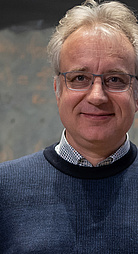

Germany has a highly efficient health service but is not in the international vanguard according to health system research. Ariel Dora Stern, one of the few researchers with a global reputation in the field, is now invited to Potsdam to drive this highly relevant and promising field of research, which has been underrepresented in Germany to date.
Last change:
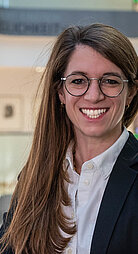

The physicist and electrical engineer, Juan Daniel Prades Garcia, is an expert on semiconductor technologies and metrology. He is invited to Braunschweig to establish a research focus on ubiquitous metrology with the aim of developing highly sensitive quantum and nano sensors that can be used to reliably and comparatively measure the tiniest particles outside the lab.
Last change:
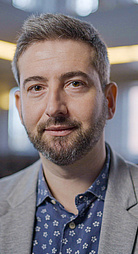

F. Ömer İlday has played a seminal role in developing ultrafast laser technology, transforming the field of non-linear laser-matter interactions in the last few years. He is now invited to join Ruhr-Universität Bochum to explore new research fields in materials science and establish a world-class research centre.
Last change:
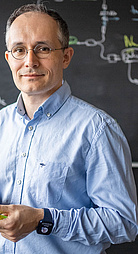

Peter N. Robinson is a pioneer in the computer-assisted genome and phenotype analysis of genetic diseases. His major work has been the development of the Human Phenotype Ontology, which is now a standard tool used internationally to diagnose gene-related diseases. At the Charité in Berlin, Robinson is invited to develop algorithms for AI-based precision medicine.
Last change:
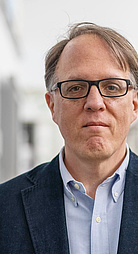

How cells sense and respond to mechanical signals is an important aspect of many biological processes, including the development of tissue structures and diseases like cancer. By recruiting the eminent researcher, Benoît Ladoux, Erlangen wants to become a beacon for mechanobiology on the international research landscape.
Last change:
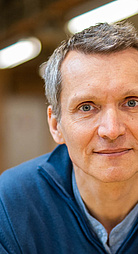

In most artificial intelligence (AI) applications, models learn from data that derives from a single information source. Additional data sources or so-called modalities can make AI models better and more reliable. An expert in multimodal learning, Marcus Rohrbach is set to become a Humboldt Professor for Artificial Intelligence in Darmstadt.
Last change:

Michaela Mahlberg uses computer-aided, quantitative linguistic methods to study huge bodies of text. By recruiting this leading specialist, FAU wants to establish itself as an international centre of excellence in the digital humanities.
Last change:

What would a red sofa look like in my sitting room? Augmented reality applications can visualise the answers to questions like this. Dieter Schmalstieg is set to continue his application-related research into virtual and augmented reality (VR/AR) as a future Humboldt Professor at the University of Stuttgart.
Last change:

